The UK is running out of time to prepare for war. And insiders are in despair
Britain is running out of time to prepare for war without a fully costed plan to defend the country, military insiders have warned.
Delays to the Defence Investment Plan (DIP) are hampering the UK’s ability to get ready for a major conflict with Russia or another adversary.
In the DIP, the Government will set out how it intends to spend money on new kit and capabilities for the Armed Forces.
The warnings coincide with the one-year anniversary of the Strategic Defence Review, which set out what the UK needs to become battle-ready.
On Monday, Defence Secretary John Healey said the DIP would be published before the Nato summit in Ankara on 7 July.
The document is expected to outline how up to £18bn of Government money will be spent on military hardware, but there are reported clashes with the Treasury over the final agreed amount.
But frustrated industry insiders and experts told The i Paper that without the spending blueprint they are in limbo, with production of military kit, weapons and resources proceeding on a piecemeal basis.
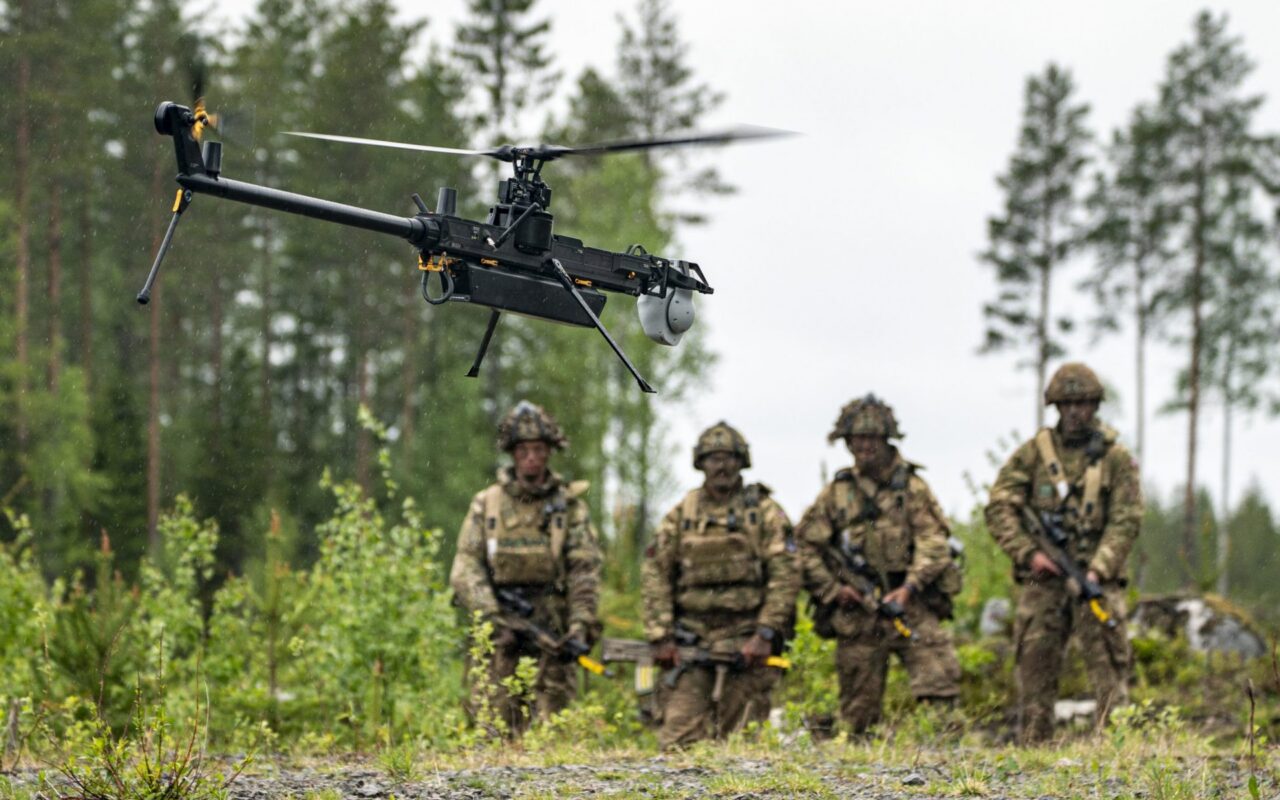
They point to a Nato exercise in Estonia a year ago, codenamed Hedgehog 2025, in which British troops were reportedly “destroyed” because they were not prepared for a drone-heavy battle similar to the front lines of Ukraine.

And in an article for The i Paper, former defence minister and military expert Tobias Ellwood claims Europe is “staring at the foothills of a major conflict” and Britain and other Nato allies are “waking up late”.
He says that while Nato allies are talking seriously about preparation for war, this is not being followed through with action – including clear budgets, procurement contracts and factory order books.
Ellwood cites the example of the Nato response to last week’s Russian drone incursion into Romanian airspace, in which allied fighter jets were scrambled: “This is a 1990s response to a 2020s challenge. Modern conflict moves at machine speed.
“By the time a traditional military response is assembled, the drone has gone, the signal has been sent and the strategic effect achieved.”
He adds: “Every month that passes delays contracts, slows production lines and postpones capabilities the Armed Forces urgently need.
“Defence companies cannot invest, recruit and expand on the basis of speeches alone. Industry requires certainty. The military requires capability. Both require funding.
“History teaches us that nations rarely fail because they did not see danger coming. They fail because they saw it, debated it and delayed responding until it was too late.
“The age of warning is over. The age of decision has arrived.”
A defence investor said “hard tradeoffs need making” but that currently spending in the sector is being done on a case by case basis, or what they called “DIP by emergent behaviour – based on what’s brought through the process first, not a strategic plan”.
The investor added: “Not enough is being done to integrate the big lessons from Ukraine – unmanned systems forces being equipped with lots of equipment, with rapid procurement from trial to integration and training is needed. We wouldn’t win in a fight at the moment, as demonstrated by [Exercise] Hedgehog.”
Another defence industry insider said there was a concern that Britain lacked the political will to tackle the problem, was “broke” and “can barely defend itself if it tried”.
On Tuesday Sir Keir Starmer told Cabinet ministers the government was “working to finalise” the DIP.
He said “the threats faced by the UK were changing faster than at any point in our lifetime” and that the Ukraine conflict was now in its fifth year, with “no clear exit strategy and peace talks at an impasse”.
The Prime Minister said “the UK and Europe had to face up to the Russian threat, which was increasingly hybrid in nature. This included cyber attacks, the sabotage of undersea cables and longer-range missile capability”, Downing St said, and that “it was the government’s duty to provide the country with the defence capability it needs”.
A Government spokesperson said: “The Defence Investment Plan will deliver the best equipment and technology into the hands of our frontline forces at speed, while investing in and growing the UK economy.
“We are working to finalise the plan and as the Defence Secretary told Parliament yesterday, the Prime Minister is determined to publish it before the Nato Summit.
“More widely, this Government is backing British jobs, British industry, and British innovators. Since July 2024, we have signed 1,400 major contracts, with nine in ten contracts going to British-based companies.”
Britain is running out of time
By Tobias Ellwood
Ukraine. A war of attrition in Europe’s east. Romania. Russian drones crossing Nato borders. The Baltic Sea. Cables cut and critical infrastructure targeted. Iran. Missiles, proxies and nuclear tensions. The Strait of Hormuz. Global trade held at risk. Cyber-attacks. Sabotage. GPS jamming. Undersea cables severed. Drones crossing borders. Merchant shipping threatened. Election interference. Disinformation campaigns.
Europe is staring at the foothills of major conflict. But are we ready?
The talk is impressive. Nato Secretary General Mark Rutte speaks of a new era of collective defence. Britain’s Defence Secretary talks confidently of rebuilding military capability and restoring readiness. Together, they paint a picture of a continent that has finally grasped the scale of the challenge.
Yet speeches are easy. The true measure of seriousness is not what is said at summits or conferences, but what appears in budgets, procurement contracts and factory order books. And this is where we fall short.
Nato’s response to a recent Russian drone incursion into Romanian airspace was to scramble fighter aircraft from across the region. But this is a 1990s response to a 2020s challenge. Modern conflict moves at machine speed. By the time a traditional military response is assembled, the drone has gone, the signal has been sent and the strategic effect achieved.
Ukraine has exposed not only the brutality of modern conflict but how warfare itself is changing. Much of today’s confrontation takes place in the grey zone between peace and war. Cyber-attacks, electronic warfare, disinformation campaigns and deniable acts of sabotage are designed to test political resolve without triggering a conventional military response.
In December last year, the Chief of MI6, Blaise Metreweli, stepped out of the shadows to deliver an unusually stark warning. Russia, she said, was “aggressive, expansionist and revisionist”. Britain was now operating in “a space between peace and war”.
Her intervention followed the publication of the Strategic Defence Review exactly a year ago. Few government documents have been as candid. It concluded that the threats facing Britain were growing in scale, frequency and complexity, demanding nothing less than a transformation of the nation’s defence posture.
Now GCHQ has added its voice. Last week, Director Anne Keast-Butler warned that Russia was “scaling up its daily hybrid activity against the UK and Europe”, targeting critical infrastructure, supply chains, democratic institutions and public trust.
To compound matters, let us concede, for the moment, that America can no longer be relied upon in the way Europe has grown accustomed to. Speaking at the Shangri-La Dialogue, US Defence Secretary Pete Hegseth delivered a blunt warning to allies. Europe, he argued, must do more for its own defence. Washington is reducing troop numbers in Germany and expects Europe to shoulder a greater share of the burden. The era of an open-ended American security guarantee is drawing to a close.
Even the British public appears to have noticed. For the first time in a generation, polling suggests voters are prepared to spend more on defence. The national mood is shifting.
Yet both Nato and the UK are waking up late.
The Government’s long-promised Defence Investment Plan remains missing. This is the document that turns strategy into capability. It converts promises into purchases. It is supposed to fund drones and missiles, stronger air defences, larger ammunition stockpiles, new submarines, warships and the technologies needed for a new age of warfare.
The delay is now causing alarm. Lord Robertson, Fiona Hill and General Sir Richard Barrons have all publicly expressed concern about the pace of implementation and the state of Britain’s armed forces.
The irony is that Britain knows exactly what needs to be done. The Strategic Defence Review identified the threats. MI6 and GCHQ have sounded the alarm. Nato is calling for urgency. Even the public is on board.
What remains absent is the political decision to act.
Every month that passes delays contracts, slows production lines and postpones capabilities the Armed Forces urgently need. Defence companies cannot invest, recruit and expand on the basis of speeches alone. Industry requires certainty. The military requires capability. Both require funding.
History teaches us that nations rarely fail because they did not see danger coming. They fail because they saw it, debated it and delayed responding until it was too late.
The warning lights are flashing. The public understands the danger. Our intelligence agencies have spoken. Our allies are demanding action.
Publish the Defence Investment Plan.
The age of warning is over. The age of decision has arrived.
Tobias Ellwood was a defence minister and former chairman of the Commons defence committee. His book, Ten Steps To Prevent World War Three, is out this summer.
المصدر: iNews