I have a pension-sharing order after my divorce – how much can I take tax-free?
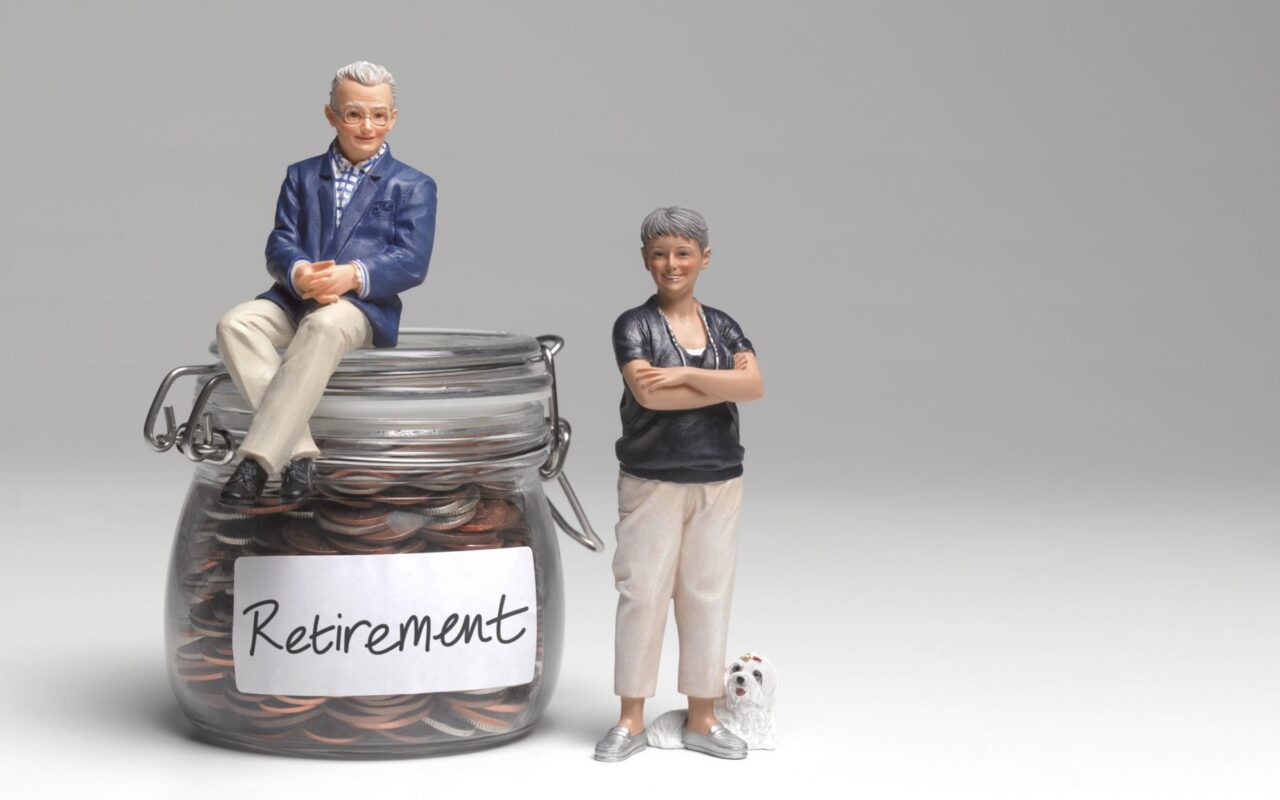
In our weekly series, readers can email in with any questions about retirement and pension savings to be answered by our expert, Tom Selby, director of public policy at investment platform AJ Bell. There is nothing he does not know about pensions. If you have a question for him, email us at money@theipaper.com.
Question: I am recently divorced and as a result of a ‘pension sharing order’ have an NHS pension valued at around £250,000. I am confused about how much I can draw down as my new partner and I want to pool our money and buy a house together. How much of this can I access via drawdown and what are the tax implications? What amount can I drawdown tax-free and would this be a one-time withdrawal? I have so far been unable to find clear information concerning this.
Answer: The answer to your question will depend on the type of pension scheme your ‘pension sharing order’ applies to. But before we get into that, let’s cover off what a pension sharing order is and how it can work.
When a couple divorces, there are different options available in relation to dividing any pension assets there might be. One of those is a pension sharing order, which enables a percentage of the pension to be transferred to the ex-spouse or civil partner (referred to in the rest of this column as ‘ex-partner’).
The benefit of this is that it offers a clean break, with each party becoming entitled to their own pension pot or stream of pension income. How this works depends on the type of pension arrangement being shared.
Where it is a ‘defined contribution’ (DC) pension, the pot should have a clear value which can easily be shared. A percentage of the pot value will be assigned to the ex-partner and then transferred into an account in their name.
For example, if the DC pension is worth £100,000 and a 40 per cent sharing order was agreed, £40,000 of that pot would be transferred to the ex-partner, with the original holder keeping the remaining £60,000.
It’s worth noting that the percentage amount will be agreed by the Court and the actual amount calculated thereafter, which can lead to significant shifts in the financial value of the award (if, for example, the value of assets in the pension rises or falls substantially during that period).
Things get a little trickier if the sharing order is applied to a ‘defined benefit’ (DB) pension. This is because, unlike a DC scheme, a DB pension provides a right to an income in the future rather than a pot value.
To apply a pension sharing order, the scheme calculates a ‘cash equivalent transfer value’ (CETV), creating a cash value for the pension promise. Once this has been provided, a percentage of that value can then be used to create a new pension entitlement for the ex-partner.
From here there are two possible outcomes: the ex-partner becomes entitled to a promised DB pension within the same scheme (determined by that scheme’s rules), or the CETV share is transferred out into a DC pot.
In either the case of a DC or DB pension sharing order, where a transfer to a DC scheme occurs the ex-partner will be able to access that pot in the same way as any other DC pension. This means the fund can be accessed from age 55 (rising to age 57 in 2028), with a quarter potentially available tax-free (provided the fund hasn’t already been accessed) and any further withdrawals taxed in the same way as income.
Does your CETV relate to a sharing order applied to the NHS scheme?
Your situation may be further complicated as you mention the sharing order relates to an NHS pension. If this is the case, you will not be able to transfer out of the scheme, even if you have been provided with a CETV.
Instead, you will be offered a ‘pension credit’ for the NHS scheme. This means an ‘internal transfer’ will occur which gives you an entitlement to a DB income stream from that scheme’s ‘normal retirement age’. Assuming this is the case, the scheme’s rules should set out how much you can receive tax-free from that age and the taxable income you would get on top of that.
Just to be absolutely crystal clear, under these circumstances you would not be able to enter drawdown and take a flexible income.
Given how complex this is, I’d strongly recommend speaking to a regulated financial adviser to help you better understand your options.
المصدر: iNews