Ben Elton: ‘I was the biggest comic in Britain – now Netflix doesn’t want me’
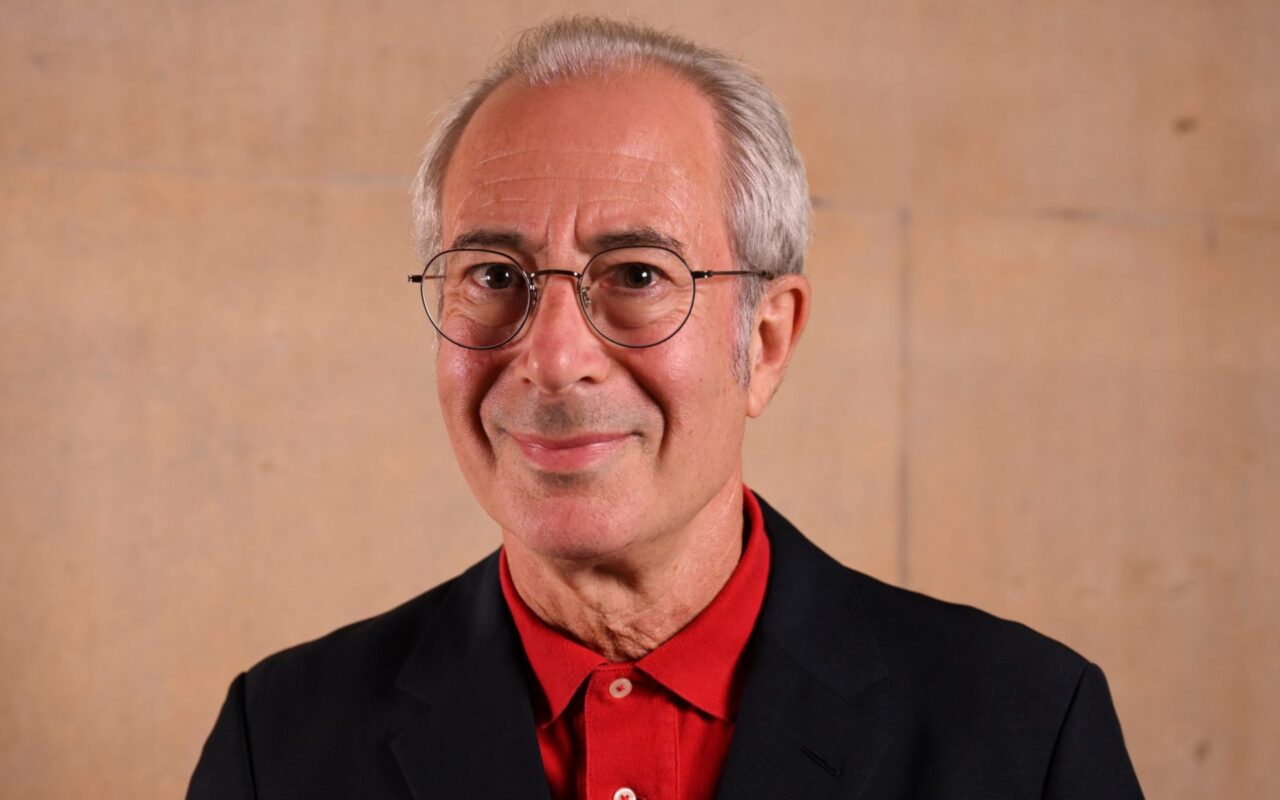
Ben Elton’s new memoir is called What Have I Done? And the short answer to that question is: a lot. The long answer is he has written 16 novels, eight television sitcoms – including the generation-defining The Young Ones and three series of Blackadder, often rightfully cited as the greatest British sitcom of all time – five stage plays and four stage musicals, including the monster Queen-inspired We Will Rock You. Oh, and he’s been a hugely successful stand-up comedian for more than four decades.
Reading his book, I was struck by how quickly Elton found success. He was brought up in Catford in south-east London, before moving with his family to Guildford in 1968. “I was certain that I wanted to be a comic writer by the time I was 14,” he tells me. “I started writing PG Wodehouse-style short stories. I was writing stories about people in gentlemen’s smoking clubs in the 20s and I was a 14-year-old boy living in Guildford.”
Elton left to study drama at Manchester University, where he met fellow students Rik Mayall and Adrian Edmondson. When he was just 21, he was commissioned by the BBC to write a pilot episode of The Young Ones, which starred Mayall, Edmondson and Nigel Planer. He wrote the pilot episode in one night. How do you do that, I ask, and can it be taught? “You can’t learn it,” he says. “There is such a thing as talent. Everyone’s brains are different. Some people can write tunes. I can write comedy.”
I first became aware of Ben Elton when he presented Saturday Live on Channel 4 in the mid-80s. His brand of stand-up comedy – political, abrasive and observational – felt positively revolutionary compared with the generation that had preceded him. Elton became famous overnight with his shiny suit, shouty manner and routines about “Mrs Thatch”.
“I was briefly the most influential comic in Britain,” Elton says. “I was defining what a lot of people came to see as stand-up comedy.” Saturday Live first aired on Channel 4 in the same week that the BBC aired BlackadderII, the series he co-wrote with Richard Curtis. “It wasn’t until I wrote this book that I computed just how successful I was in the 80s and how ubiquitous,” he says, “and that’s why I think so many people were very irritated by me.”

He recalls an edition of Newsnight devoted to discussing why he was so awful and reading an article by the acclaimed playwright John Osborne pithily titled “Why I hate Ben Elton”. “I always remember them,” he says about bad reviews. “Nobody forgets. If you overhear somebody say: ‘What an asshole,’ you’ll always remember hearing it. You won’t ever get over it.”
Fortunately for him, Elton was surrounded by a group of friends he had met in the late 70s and early 80s, with whom he continued to work: Rik Mayall, Adrian Edmondson, Stephen Fry, Hugh Laurie, Dawn French, Jennifer Saunders and Rowan Atkinson. “Sustaining friendships has been the gift of my life,” he says. “I’ve never worked with anyone who didn’t become a friend.”
On his recent book tour, Elton was joined by some of those friends: Emma Thompson, whom he first met when she was 21, interviewed him in Ely; Richard Curtis talked to him in Cheltenham; and next week, Elton will be in conversation with Adrian Edmondson at the Hay Festival. “That is going to be interesting,” he says. “I’m sure Rik will come up.”
Mayall died in 2014 and his relationship with Mayall was complex. Mayall vetoed Elton from being cast as Mike in The Young Ones. He insisted that both he (Mayall) and Lise Meyer be given co-writing credits when he had earlier assured Elton that he would be credited as the sole writer. When Elton became famous, it didn’t always sit easily with Mayall. “He was meaner to me than I ever was to him,” Elton says. “Rik was very self-obsessed. That doesn’t mean he wasn’t kind, or he didn’t love his friends or wasn’t generous. But in the long run, Rik was about Rik.”
Written down, this sounds like Elton is being harsh, but some of the happiest times he describes in his memoir involved hanging out with his old friend. It was Mayall who invited him to see the legendary rock and roll singer Carl Perkins play an intimate gig in London. Elton and Mayall went along and were astonished to see that Perkins’ guitarist was George Harrison. The former Beatle sidled up to Elton and they started talking. Elton tells a great story in his book about attending a party at Harrison’s home, which culminated in Elton singing with George Harrison as Ringo Starr played drums.

He also became friends with Paul McCartney. “The single greatest gift of my small degree of celebrity has been that it somehow ended up with me getting to know two Beatles and work with Queen,” he says. “I got to meet Queen because they loved Blackadder and The Young Ones.”
Elton was also offered by Andrew Lloyd Webber the chance to have dinner with Margaret Thatcher. He declined. “I didn’t really want to break bread, even though I would have found her fascinating company,” he says, “I was worried I might like her.”
Elton may once have been ubiquitous, but these days he fears the only thing worse than being talked about: not being talked about. “No one’s very interested in me,” he says. That is not quite true – Elton played to 100,000 people on his last stand-up tour. “I’d like to think there’s another tour in me,” he says. “I’ve done two tours in the last five years, and I’d like to think I might do another one.”
None of which is enough to persuade television bosses to give him another shot. “We filmed my last stand-up tour, but we could no more get that on Netflix than fly to the moon,” he says. “I’m not remotely hip anymore and nobody feels cool commissioning me.” They still want to watch and read him, though – Elton is planning on writing another novel and already amassing notes for possibly going back on the road again. He recently turned 67.
“I used to be a radical,” he says, “and now I’m feeling something of a curmudgeon.” I’m not sure that is entirely fair – from his book and 90 minutes of his company, Elton comes across as passionate and engaged as he was in the 80s, but perhaps more grateful for the journey his life has taken. “We were a lucky generation,” he says. “I have had my share of privilege. Somebody who’s had as good a fortune as me can’t be bitter about it.”
Ben Elton will be in conversation with Adrian Edmondson at the Hay Festival on Wednesday. His book ‘What Have I Done?’ is out now
المصدر: iNews