Branching out
As bilateral aid retreats, the world’s development banks are reaching further than ever. Their critics worry that they have lost the plot.
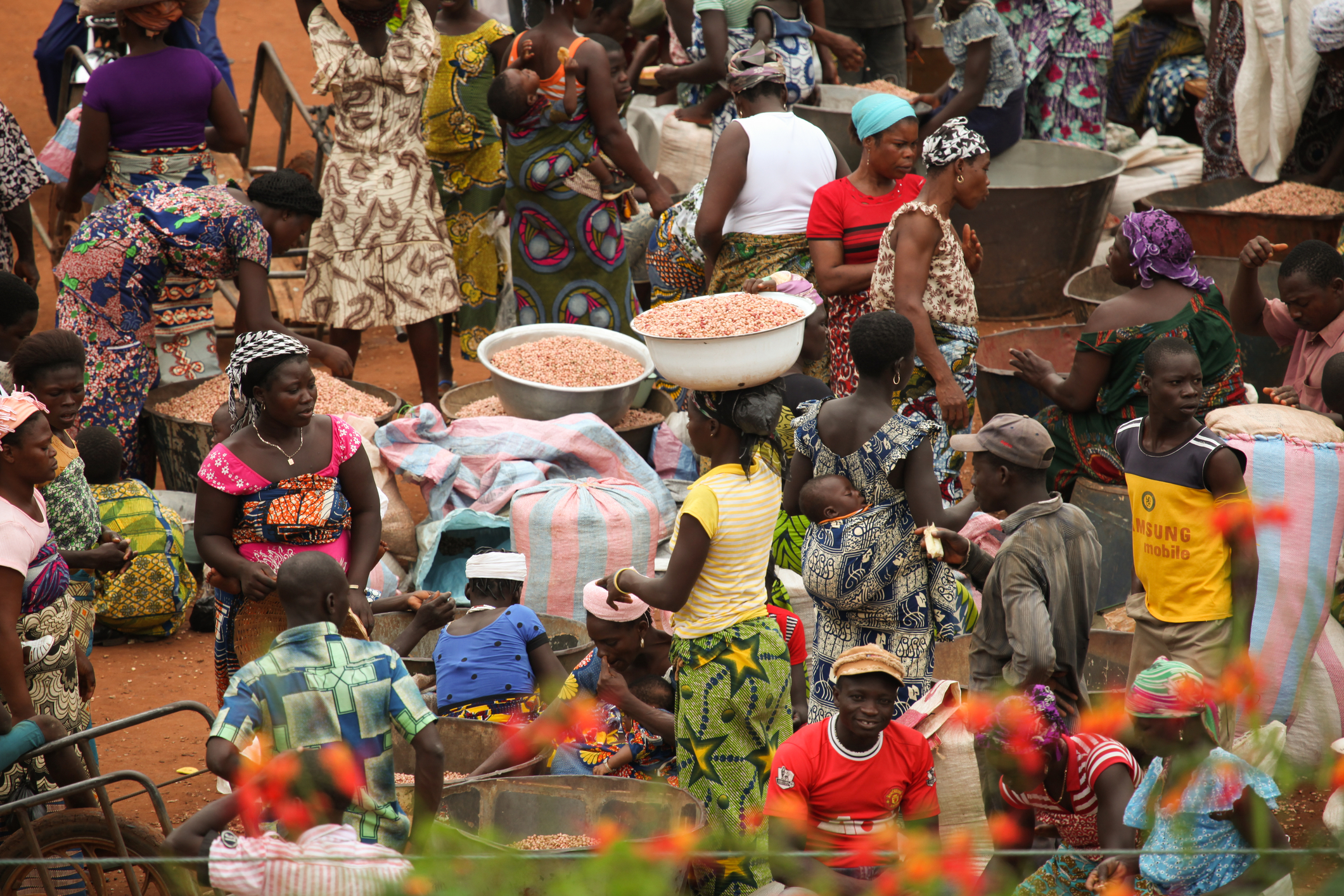
In London in mid-May 2025, at its first Annual Meeting in the city for nine years, the European Bank for Reconstruction and Development’s governors granted recipient-country status to Benin, Côte d’Ivoire and Nigeria. Kenya and Senegal, which had completed shareholder paperwork earlier in the year, were already in line behind them. The bank, which had spent its first 34 years lending in Central and Eastern Europe, the former Soviet republics, Türkiye, Mongolia and the southern Mediterranean, was now in sub-Saharan Africa for real.
By th end of 2025 the EBRD counted 79 shareholders, had approved a new five-year Capital Framework running to 2030, and had lifted its capital base by four billion euros to underwrite continued support for Ukraine. The theme of its London Business Forum that week, chosen well in advance, was ‘Expanding Horizons, Enduring Strengths’. On both counts the bank could fairly claim delivery. The 1991 mandate (foster transition in the former Eastern bloc) feels rather distant.
In 2024 the EBRD invested a record 16.6 billion euros, up by more than a quarter on the year before. Last year, it invested even more, 16.8 billion euros, while also mobilising an additional 26.8 billion euros alongside its own investments. The Asian Development Bank’s governors went further: in November 2025 they approved an amendment to its founding charter removing a long-standing lending limitation, paving the way for annual commitments to rise from 24 billion US dollars to more than 36 billion US dollars by 2034. Under Ajay Banga, the World Bank has secured roughly 150 billion US dollars in additional ten-year lending capacity from a series of capital adequacy reforms (lower equity-to-loan ratios, hybrid capital, ‘enhanced’ callable capital), trimmed the average project approval time from 19 months to 16, and set itself a target of 12.
In December 2025 the World Bank and the ADB unveiled a Full Mutual Reliance Framework, under which a single lead lender prepares and supervises co-financed projects to the standards of both institutions. The first two beneficiaries are a health-system overhaul in Fiji and a 120 million US dollars transport, drainage and urban-resilience project in Tonga (the largest development partner-financed undertaking in the country’s history). Borrowers, plainly, are not complaining.
In January 2025 the Trump administration dismantled the United States Agency for International Development (USAID), the world’s largest bilateral donor; by March, 83 per cent of its programmes had been cut. The United Kingdom is moving its foreign aid budget from 0.5 per cent of gross national income to 0.3 per cent by 2027. France has announced cuts of around 37 per cent, Germany has trimmed its development budget under a new coalition, and the OECD’s Development Assistance Committee counts 11 of its members signed up to reductions. Bilateral aid to the world’s least-developed countries is now projected to fall, in 2025, to its lowest level since the mid-2000s. Of the 25 countries most exposed to USAID’s collapse, 21 are either in debt distress or at moderate-to-high risk of it. Heike Harmgart, the EBRD’s managing director for sub-Saharan Africa, was diplomatic in a March interview: “Countries have welcomed us warmly in the past, but I think they are welcoming us even more warmly.”
Stuck in transition
The EBRD was founded in 1991 with a finite-sounding remit: to foster transition in countries committed to multiparty democracy, pluralism and market economics. Only Czechia has formally graduated from its assistance, and that was back in 2007. Two more recent moves have gone the other way: Russia was suspended in 2014 after the annexation of Crimea, and Belarus followed in 2022 for backing the invasion of Ukraine. Türkiye joined as a country of operations in 2009, Mongolia in 2006, Egypt and the southern Mediterranean in 2012; once temporary additions, they are now fixtures. The pipeline of countries of operation, in other words, has only ever lengthened. The bank itself, in its 2013 Transition Report, conceded that many of its countries of operation were “stuck in transition”, and the formulation has aged badly.
Bankwatch, a Prague-based NGO that has tracked the bank for two decades, has long argued that EBRD lending in Mongolia (a member since 2006) has been weighted to mining and natural resources, deepening rather than diversifying the country’s commodity dependence (the so-called ‘resource curse’). Article 1 of the bank’s founding agreement still requires its countries of operation to be applying democratic and market principles. Several rather plainly are not. Türkiye, for years the bank’s largest single recipient, has been classified ‘Not Free’ by Freedom House since 2018, and the score has continued to slide. Squaring those circles, year after year, has become a bureaucratic art form.
The annual financing gap to meet the United Nations’ Sustainable Development Goals is around four trillion US dollars, by the UN’s own arithmetic. Where private capital does not reach and bilateral aid is being pulled back, the multilaterals can still borrow cheaply against shareholder capital, recycle their balance sheets and bring policy advice alongside their money. The rest of the system has stopped doing any of those things. The EBRD’s first 2025 forecast for its new African region had Senegal growing at 8.4 per cent this year, Kenya at 4.7 per cent and Nigeria at 3.4 per cent. Cheikh Diba, Senegal’s finance minister, called the country’s accession a “strategic turning point” for its international economic partnerships. John Mbadi Ng’ongo, his Kenyan opposite number, was almost as effusive.
The banks are doing more, in more places, with more money. They are also being asked to do this because so much else has been pulled back. Critics of the branching-out are not wrong about the risks. They are simply being asked to weigh those risks against an alternative that no longer exists.
Photo: Dreamstime.
Branching out was originally published on Emerging Europe.

المصدر: Emerging Europe