
‘High risk gamble’: How Trump’s economic messaging is hurting Republicans

The White House repeatedly says the economy’s best days are right around the corner. With five months to go before the midterm elections, President Donald Trump is running out of time to deliver.
Inflation is running hotter than at any point since Trump’s return to office, the government said Thursday. The Commerce Department is now estimating that the economy grew much more slowly through the first three months of this year than previously assumed. Measures of personal income are falling, and consumer sentiment has plummeted below even the historic lows recorded during the pandemic and post-Covid 19 inflation surge.
Administration officials say the economic disruptions caused by the war with Iran — which have choked off global supply chains and sent energy prices skyrocketing — will fade rapidly once peace is at hand. They deployed a similar playbook to describe how the turmoil from last year’s sweeping tariff announcements would subside as new trade agreements were in place. And they were bullish that tax breaks and lofty refunds made available through the One Big Beautiful Bill Act would improve the economic mood.
But Trump’s standing with voters has only gotten worse. The president’s economic approval rating is at an all-time low. Administration officials promise that his policies will put the economy on better footing in the future, but its present state could cost the GOP control of Congress.
“Donald Trump has chosen to take a long-term approach, and he is potentially willing to sacrifice majorities in the remaining two years of his administration to solve these problems,” said Brian Seitchik, a GOP strategist who led Trump’s operation in Arizona during the 2016 presidential campaign. “He is taking a high-risk gamble.”
Trump said during a Cabinet meeting on Wednesday that the midterm elections have had no bearing on his plans for Iran, and he previously made headlines by bluntly stating, “I don’t think about Americans’ financial situation” in conducting the war. But he has also sought to reverse the conversation around cost-of-living issues, and has claimed that gas prices will come “crashing down” as soon as the war ends.
Even if that occurs, the shot clock is winding down on his ability to change the narrative.
“The big picture environment is pretty well settled by the time you get into the summer,” said Vin Weber, a former GOP congressman from Minnesota and a longtime party strategist. “The notion that the whole environment is going to change — the opportunity for that to happen has passed. The fighting now is house to house.”
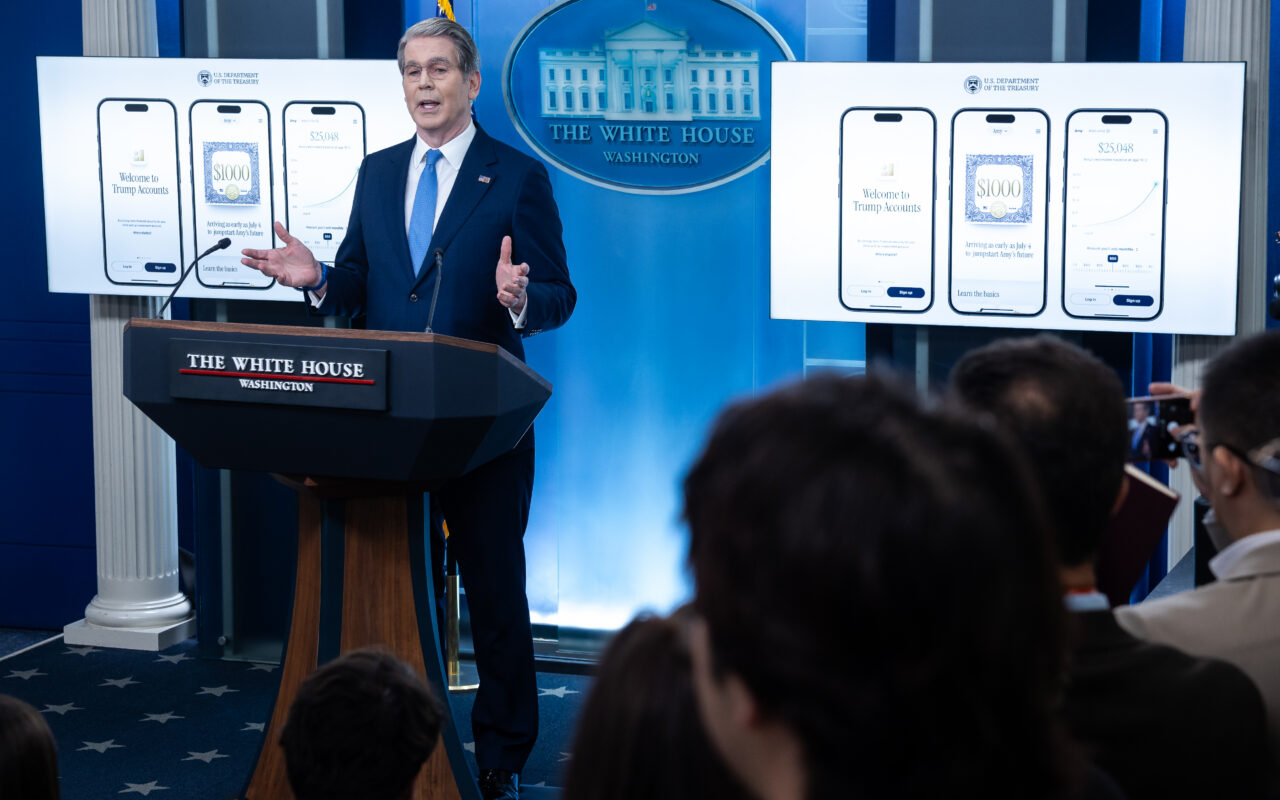
In a White House press briefing on Thursday, Treasury Secretary Scott Bessent echoed Trump’s words, saying he expects to see prices come down “very quickly” once the U.S. and Iran agree to a deal that will reopen the Strait of Hormuz. The oil market will be “very well-supplied on the other side of this,” Bessent said, adding that unemployment remains low, tax refunds have been substantial and consumer spending “is still quite high.”
“I believe that we will get through this challenging period,” he said. “On the other side of this, I’ve said publicly that I think we’ll be back to substantial disinflation.”
But the latest batch of economic data is trending in the wrong direction. The Commerce Department on Thursday reported that the personal consumption expenditures index — the Federal Reserve’s preferred inflation gauge — climbed at an annual rate of 3.8 percent in April, driven by rising energy prices. The so-called core PCE, which removes volatile food and energy costs, ticked up at an annual rate of 3.3 percent. The department also downshifted its estimate for gross domestic product growth to 1.6 percent from 2 percent for the first three months of the year, largely due to revisions on consumer spending and investment.
Even though the monthly inflation report was tamer than most economists assumed, “I would not take much solace from today’s result,” Omair Sharif of Inflation Insights told clients in a note. “Core inflation is likely to be firmer next month and risks to the upside from the lagged impact of the energy surge remain in place.”
When asked for comment, the White House referred to Bessent’s remarks.
John McLaughlin, a Trump pollster, said the president’s base “overwhelmingly supports him.” He added that if Trump can make a case that he stopped Iran from obtaining nuclear weapons, reopens the Strait of Hormuz, and gas prices come down, “people are going to be more supportive of him and of Republicans for Congress.”
Nevertheless, the combination of forces bearing down on Trump’s economy spells trouble for the GOP in the midterms. Gas prices have been stuck above $4 per gallon for weeks due to the war, according to AAA. Yields on long-term government debt and mortgage rates have spiked as inflation climbed — and are being further stoked by rising energy costs and mounting piles of government debt.
Meanwhile, the tax breaks that Trump and top administration officials swore would buoy American pocketbooks have been gobbled up by the run-up in gas prices. Michael Pearce, the chief U.S. economist at Oxford Economics, said he’s now projecting consumer spending will expand at a slower pace through the rest of the year as larger tax refunds “wear off and the drag from higher gasoline prices mounts.”
And while the economy remains healthy by many metrics — unemployment is low, equity markets are booming, and public companies are consistently outperforming Wall Street’s expectations — popular measures of economic sentiment have cratered. The Conference Board’s consumer confidence index dipped this week as the inflationary effects of the Iran war took hold.
“There has perhaps never been a greater discrepancy between the record low consumer sentiments and the standard measures of economic performance,” said Tomas Philipson, a University of Chicago economist who was acting chair of Trump’s Council of Economic Advisers during his first term. “It seems somewhat higher inflation than usual must disproportionately drive consumer sentiment.”
That’s provided considerable fodder for Democrats looking to capitalize in the upcoming midterm elections.
“Americans are struggling, but Trump and Republicans in Washington can’t be bothered to help,” Rep. Brendan Boyle (D-Pa.) said shortly after the inflation report was released. “Unless you can cut a check for his ballroom, Donald Trump clearly couldn’t care less about you.”
Megan Messerly contributed to this report.
المصدر: Politico