In China, AMD CEO Lisa Su is understated while Nvidia’s Huang is more razzmatazz
Back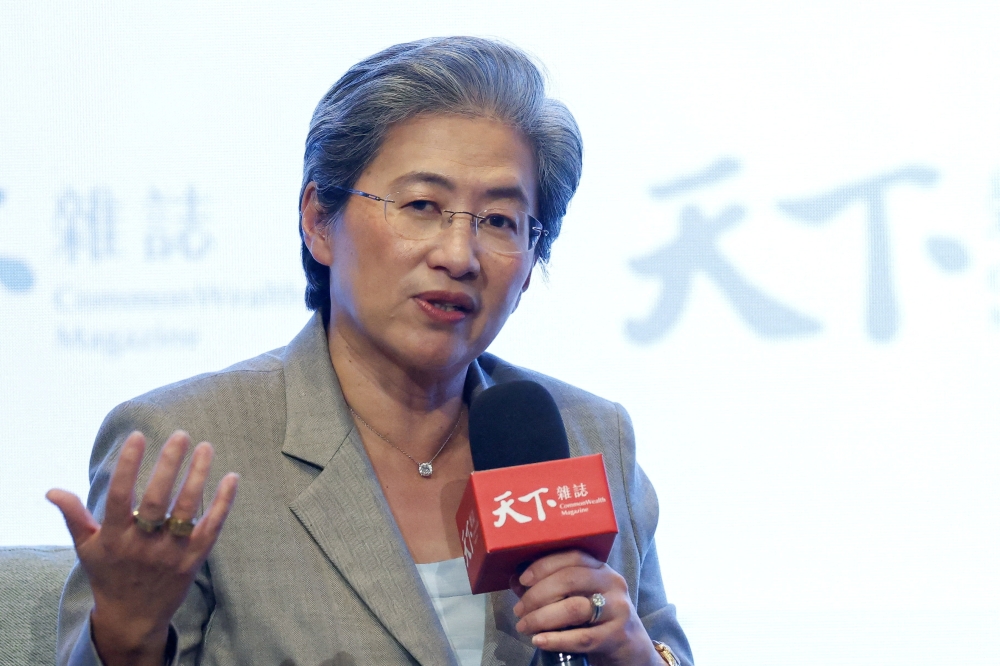
- AMD’s Su and Nvidia’s Huang approach China market differently
- Both face separate challenges in world’s second-biggest AI hardware market
- Nvidia mired in geopolitics, AMD tech has its detractors
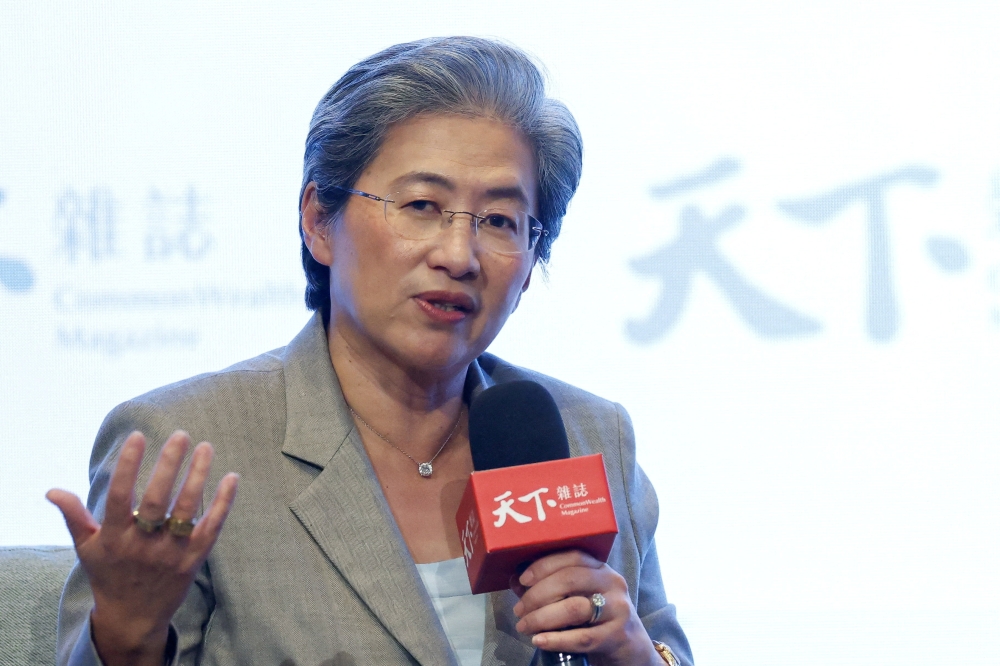
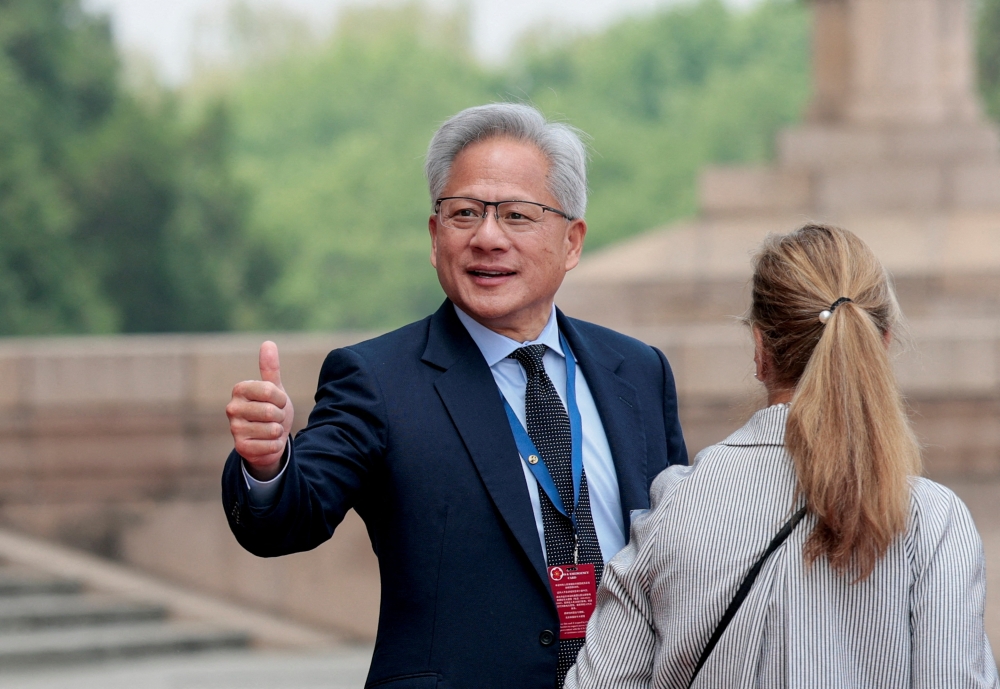
BEIJING, May 31 — When AMD CEO Lisa Su arrived in China last week just days after Nvidia’s CEO left, she kept a much lower profile than Jensen Huang, who drew crowds in the centre of the capital as he posed for photos and ate local delicacies like Beijing-style soybean paste noodles.
Their contrasting approaches show two very different forms of corporate diplomacy around the world’s most politically sensitive artificial intelligence chip market, where their fortunes have also been diverging.
Just a year ago at the annual Computex trade show in Taipei, Huang said Nvidia’s market share in China had dropped to 50 per cent from 95 per cent due to US export controls.
Since then, that has effectively fallen to zero, he said this year, amid Beijing’s push for self-reliance in advanced AI chips. Huang has previously estimated that China’s AI chip market would be worth US$50 billion (RM198 billion) this year.
By contrast, AMD commands 4 per cent of China’s AI chip market, according to IDC, a research firm, and it has more routes into the country than AI accelerators, which are Nvidia’s mainstay.
AMD can serve Chinese customers with central processing units (CPUs), consumer graphics processing units (GPUs), AI chipsets and programmable integrated circuits called FPGAs, said Lian Jye Su, chief analyst at Omdia, a tech research firm.
That gives AMD access to more types of system architecture as AI workloads spread beyond training large models into broader enterprise use, he said.
Diverging China playbooks
With the two US tech CEOs showing up in Taipei before the Computex event, their diverging China playbooks appear more pronounced, as both over the past week unveiled big investment plans in Taiwan, home to the world’s largest contract chip manufacturing firm, TSMC.
Their contrasting approach to China also carries an unusual personal dimension: both hail from Taiwan and have said publicly that they are distant relatives.
AMD’s announcement on its Taiwan investment followed a flurry of meetings that Su had in China last week, where she spoke at an AMD developer event and met customers and partners.
She also had a publicly announced meeting with Chinese Vice Premier He Lifeng, who said Beijing welcomes companies including AMD to “seize the opportunities presented by China’s development and deepen mutually beneficial cooperation.”
Beijing, however, did not have a comparable senior-level meeting for Huang, who was in Beijing around the summit between China’s Xi Jinping and US President Donald Trump on May 14 and 15.
That silence stood out because Huang has been the more vocal of the two executives in arguing that US chip curbs risk handing China’s AI market to domestic rivals like Huawei.
An adviser to multinational CEOs with business in China, who declined to be identified so they could discuss specific executives, said Su’s lower-profile approach was better suited to the current geopolitical environment.
The adviser added that the politicisation of US-China commercial ties and volatility in public sentiment had raised reputational risks for global chip CEOs.
Su said last week that China accounts for about 20 per cent of AMD’s revenue and remains important across PCs, gaming and some data-centre segments.
“Frankly, you look at the size of the market and the size of our portfolio, and we’ll continue to partner very closely with our Chinese customers,” she said.
AMD’s push faces challenges
While Huawei and other domestic chipmakers jump into the void left by Nvidia, AMD’s Shanghai developer event on May 19 suggests the Santa Clara, California-based company is also looking to fill the gap.
During the event, Su promoted ROCm, AMD’s open-source software stack, to Chinese developers at a time when many AI firms are seeking alternatives to Nvidia’s CUDA ecosystem because the most advanced Nvidia hardware is hard to obtain.
However, there are signs that the opening remains limited for now. AMD’s software ecosystem is far less mature than Nvidia’s and US export controls also restrict the US firm from selling its most advanced AI chips to China.
A person familiar with AMD’s China operation who was not authorised to speak to the media said it sold a significant number of AI chips to Alibaba last year but the Chinese firm had to devote substantial engineering resources to debugging and adapting them because AMD’s software ecosystem was weaker than Nvidia’s.
AMD and Alibaba did not respond to requests for comment. — Reuters
المصدر: Malay Mail