
Mamdani is touting universal child care. He still needs to find staffers to run it.
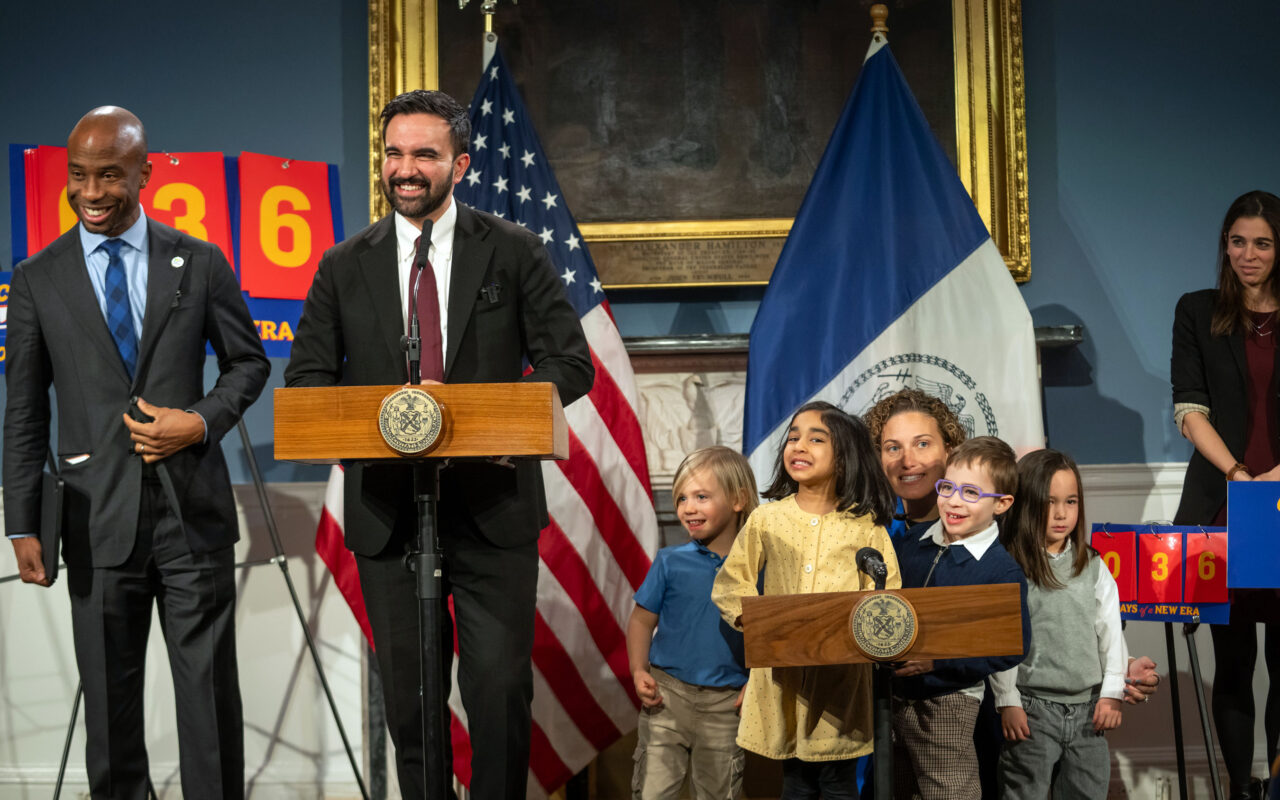

NEW YORK — Mayor Zohran Mamdani’s universal child care program has become his most visible early win, promoted through a series of kid-filled press conferences, a jingle contest with Cardi B and even a visit from former President Barack Obama, who offered the kind of blessing mayors dream of: “This is what we need.”
But as Mamdani showcases the program as his administration’s marquee achievement and a potential blueprint for the country on a crucial pocketbook issue, City Hall faces a vexing question: How will it staff up thousands of new child care jobs that are both low wage and highly demanding?
“The focus so far has been on trying to secure the funding in stages and talking about who’s eligible — but much less conversation about who’s going to do it, how will they get paid,” said Robert Cordero, CEO of Grand Street Settlement, one of the city’s largest early childhood and family services organizations.
The Mamdani administration has said staffing is largely in place for the September rollout of 2,000 seats for two-year-olds, as well as an additional 2,000 seats for three-year-olds across 56 zip codes in underserved neighborhoods. City officials are working with providers who already operate toddler programs citywide, and they pointed to staffed classrooms or existing programs for three-year-olds, as they prepare for the rapid expansion.
But as the city scales up the program — an additional 10,000 seats are set to come online by the fall of 2027 — hiring caretakers for the children occupying those seats will become increasingly difficult. By the end of Mamdani’s full term, the city’s child care program is expected to serve all two-year-olds. Gov. Kathy Hochul, also a Democrat, allocated $73 million for the first year and $425 million for the second year. But it remains unclear how much state money will be made available beyond that.
The city will need at least 30,000 additional child care workers to achieve a truly universal child care system — one that serves children from birth to five years old in licensed settings, according to a December report</u>","link":{"target":"NEW","attributes":[],"url":"https://www.dccnyinc.org/wp-content/uploads/2025/12/Workforce-Report-6sm.pdf","_id":"0000019e-7392-dc36-a1fe-77fe4eb40002","_type":"33ac701a-72c1-316a-a3a5-13918cf384df"},"_id":"0000019e-7392-dc36-a1fe-77fe4eb40003","_type":"02ec1f82-5e56-3b8c-af6e-6fc7c8772266"}”>a December report by the Day Care Council of New York, an organization of child care providers.
The report, authored by Emmy Liss, now-executive director of Mamdani’s Office of Child Care, estimates that fully implementing universal child care would require a total of about 68,000 workers. Ensuring that the workforce is in place when the time comes will almost certainly be a significant challenge.
An entry-level child care worker earns a median of about $34,000 a year, a salary that typically climbs to roughly $43,000 with experience. That’s just more than half of the mayor’s own cost-of-living benchmark for a single adult. Given that reality, turnover is an obstacle to maintaining staffing levels, with many child care workers leaving their jobs for higher salaries as entry-level elementary school teachers.
“It’s really been the low salaries that have made it so hard to both attract and retain staff,” Gregory Brender, the Day Care Council of New York’s chief policy officer, said.

The hiring process also involves hurdles such as inflexible credentialing pathways that often require in-person participation during work hours and prolonged background checks, which take an average of 30 days but can drag on for months. Those delays have resulted in providers losing employees and have stalled the opening of child care seats. On top of that, the overall difficulties around staffing are magnified in infant and toddler care, which requires lower staff-to-student ratios to meet intensive developmental needs.
As it now stands, between 33,000 and 40,000 people staff New York City’s child care infrastructure, and the vast majority of them are women of color, Liss told city lawmakers last month.
New York City Council Member Jennifer Gutiérrez, who chairs the early childhood education subcommittee, pointed to programs she said are promising as feeders, including apprenticeships at the City University of New York. Still, she said Mamdani’s administration has more work to do.
“I think that they are working on it, I think that they are taking it seriously. I didn’t get a full blueprint just yet,” Gutiérrez said. “We got little snippets of things.”
State lawmakers and advocates pressed Hochul to allocate funding to boost wages for child care workers, but that money was not included in the final budget — something Assembly member Andrew Hevesi said the Mamdani administration sidelined.
“I spoke to the Mamdani team about the need to pay the workforce adequately, but the push to get it done in Albany that it required never manifested,” said Hevesi, who chairs the Assembly’s Children and Families Committee. “They did not make the workforce the priority.”
When asked by POLITICO about the challenges ahead, Mamdani pointed to investments in his executive budget, including more than $36 million to add nearly 200 child care workers across the Division of Early Childhood Education and related agencies, as well as $40 million to raise reimbursement rates for child care providers for the first time since 2021.
“I am confident that our city is going to be able to meet the demand and meet the needs of working families across the city,” he said during a press conference last week.
Advocates say it’s still too early to tell whether the city’s rollout will strain the workforce because the administration is starting relatively small this fall.
“There’s no indication yet that we have to be worried,” said Rebecca Bailin, executive director of the parent-led nonprofit New Yorkers United for Child Care. “We are going to be keeping an eye on it for sure.”
During a City Council hearing last month, Liss told lawmakers her office is working to bring in partners from inside and outside city government to build a comprehensive plan for growing and supporting the workforce. She told POLITICO there isn’t a specific timeline for releasing the plan yet, but that her office is communicating with city agencies, including the school system and the Office of Talent and Workforce Development.
Mamdani’s administration also announced a philanthropic effort last month to raise money to support the child care expansion, including workforce development.

Meeting staffing challenges will depend largely on addressing long-standing compensation issues, as both child care workers and early childhood educators in community-based organizations have historically been paid far less than their public school counterparts. Home-based providers — whom the city will likely rely on to implement the program for two year olds — are among the lowest-paid in the field.
Liss said addressing those disparities “has to be part of our expansion agenda” and acknowledged that the city recognizes the need for “dedicated sustained revenue.” But she would not say how the administration plans to raise that money.
“We know that there are real gaps here and it’s a longstanding equity issue,” she said.
Nora Moran, director of policy and advocacy at United Neighborhood Houses, an umbrella organization, noted that child care providers are still operating under the contract announced in 2024</u>","link":{"target":"NEW","attributes":[],"url":"https://www.dc37.net/take-action/media-center/news-release/2024/mayor-adams-announces-tentative-agreement-between-dc-37-local-205-and-day-care-council-of-new-york-to-deliver-raises-for-child-care-workers/","_id":"0000019e-7392-dc36-a1fe-77fe4eb50000","_type":"33ac701a-72c1-316a-a3a5-13918cf384df"},"_id":"0000019e-7392-dc36-a1fe-77fe4eb50001","_type":"02ec1f82-5e56-3b8c-af6e-6fc7c8772266"}”>announced in 2024.
“We’re watching the 2K expansion to see on the wage piece what that looks like, but we certainly hope that in the next round of contract negotiations, we get back on that path to parity,” Moran said.
City Hall and higher education institutions are trying to develop a stronger pipeline of new child care workers, but lawmakers and advocates say challenges persist.
The city’s Office of Talent and Workforce Development told POLITICO it’s identified a pool of more than 1,000 candidates, for example, but not all of them hold the age-specific certifications required for different classroom settings.
Council Member Julie Won, who chairs the workforce development committee, credited NYC Talent, the city office, with contributing to CUNY’s apprenticeship program.
But Won questioned the administration’s preparedness at a Council hearing last month, noting that NYC Talent’s December plan outlining workforce priorities did not single out early childhood education.
Henry Garrido, executive director of District Council 37, the city’s largest municipal union — whose members include early childhood and child care workers — pointed to the dearth of certified teachers. He said he’s been involved in the plan the city is working on and touted a proposed workforce training program for the sector.
“What we’ve been talking to the administration about is creating a pathway to train and certify teachers through the workforce development program that the city has and using CUNY as a tool to scale up,” Garrido said.
CUNY’s early childhood initiatives are working with the city to sustain the pipeline into the profession, according to Dona Anderson, executive director of CUNY’s New York Early Childhood Professional Development Institute. An apprenticeship pilot program there drew 400 applicants for just 30 available slots. Expanding the pilot to 200 apprenticeships would require $3 million. In addition to that, roughly 3,600 CUNY students are working toward a degree in early childhood education.
“My worry is that we have empty classrooms — because we have children and we have classrooms — but we don’t have the educators,” Anderson said. “They are the linchpin to that.”
المصدر: Politico