Norway’s betrayal exposes myth of ‘reliable partners’
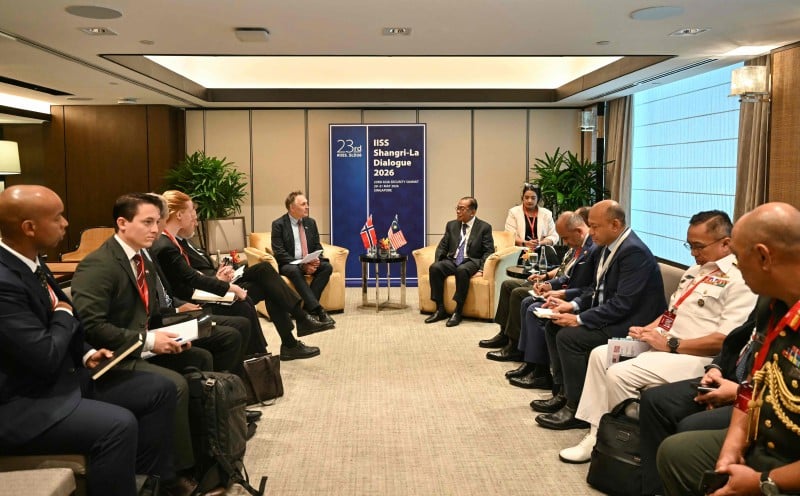
ONE has to wonder what went on behind the scenes in this whole kerfuffle over the Naval Strike Missile (NSM) system which was planned for the Royal Malaysian Navy’s littoral combat ship (LCS) programme.
We paid for it, almost completely, but will never get to “enjoy” it.
Millions spent for a surface-to-surface missile system which was supposed to have been delivered starting this year, but cancelled at the 11th hour by the Norwegian government.
Our first LCS vessel, the KD Maharaja Lela, is set to be delivered at the end of the year, but it looks like it will be without its primary long-range weapon as the government, the Defence Ministry and the RMN search for alternatives.
Just when this will be is anybody’s guess, and whether we will recover the money already spent will take perhaps a long while.
With 95 per cent of the deal already paid for, the Norwegian government decided to cancel the export licence for the NSM system.
Ostensibly, Oslo had withdrawn several export licences related to certain technologies as part of efforts to tighten the country’s export controls, not just the one for the NSM to Malaysia.
The priority for Norway, apparently, goes to close strategic partners.
Defence Minister Datuk Seri Mohamed Khaled Nordin was livid when he took to the stage during the plenary session at the recent Shangri-La Dialogue in Singapore.
Who could blame him?
He said Norway’s decision to revoke the export licence raised troubling questions about whether international agreements and strategic partnerships could still be relied upon.
It reflected a broader erosion of trust in a world where treaties, humanitarian principles and international obligations were increasingly being disregarded or selectively applied to suit geopolitical interests.
But, what exactly went on that we are now left with a less-than-perfectly-defended vessel? How did the Norwegian government come to such a decision?
A defence analyst, when speaking to this paper, drew parallels to the deal for naval vessels from France to Russia, one that fell through when the latter invaded the Crimea and the French government put a stop to the sale.
The analyst was talking in regards to compensation and how long it may take for Malaysia to receive compensation for the NSM deal, but it is interesting that he would draw such an analogy.
What exactly did Malaysia do, then, for Oslo to decide to cancel the NSM deal?
Do certain countries worry perpetually that we will invade them or parts of their territories? Surely Norway does not fear that Malaysia will attack them.
Malaysia is a peaceful country, one that has never attacked another sovereign state.
It has been regularly taking part in United Nations peacekeeping missions since the 1960s — just a few years after Malaya gained independence — and has even been involved in peace negotiations in other countries in the region.
All the weapons and armaments we possess, the money allocated to the Defence Ministry, is purely for that very purpose — defence.
The NSM system would have been for just that use.
So where, then, is the justification for cancelling a deal which had been made in 2018, with the vast majority of the payments already made?
What reason can Norway have for such a betrayal, because a betrayal this was indeed.
Norway can apologise all it wants, but it has proven that it is no friend of Malaysia.
It is not an enemy. But it is not a friend.
To paraphrase arguably the most famous bard of all time, William Shakespeare, from his tragedy Hamlet: “Something is rotten in the state of Norway.”
The writer is an NST news editor
© New Straits Times Press (M) Bhd
المصدر: New Straits Times