Popes having their say on turning points in history
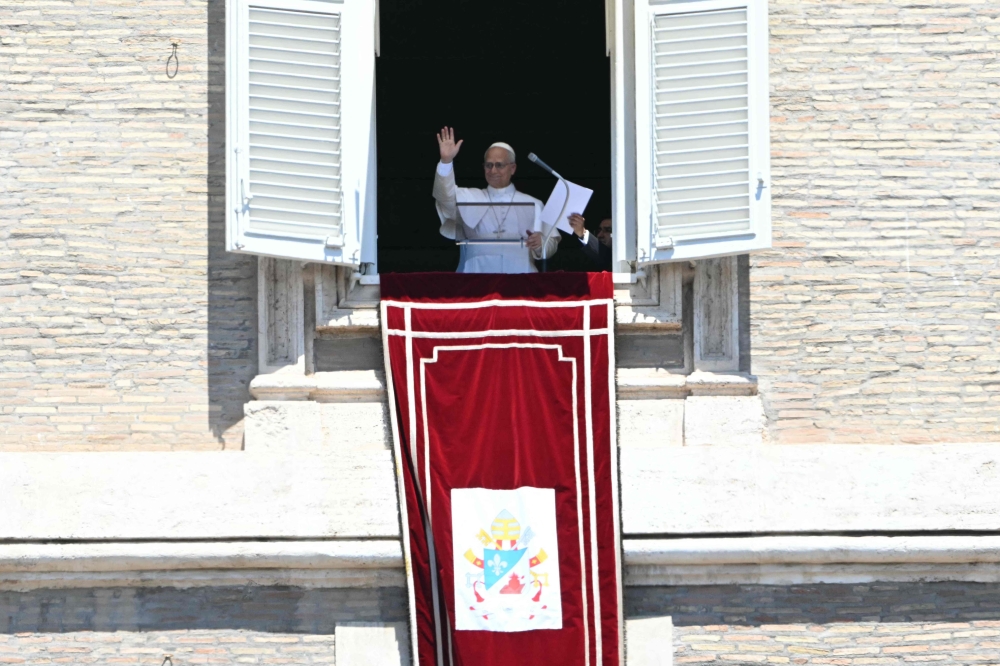

VATICAN CITY, May 26 — From the Industrial Revolution to the advent of artificial intelligence, popes have long taken a stand on scientific, social and technological transformations.
With the publication of the encyclical Magnifica Humanitas (Magnificent Humanity), Leo XIV will have his say on the ethical questions raised by AI.
It will be his first encyclical—a sort of manifesto issued by popes on major issues of their time.
Here are times in which his predecessors have weighed in:
Industrial Revolution
The Church’s first major structured response to technological upheaval dates back to the end of the 19th century when, in 1891, in the midst of the Industrial Revolution, Leo XIII published the encyclical Rerum Novarum (Of New Things).
Confronted with rapid urbanisation, the rise of factories, and the growing precariousness of the proletariat, the pope sought to propose a path between liberal capitalism and revolutionary socialism.
He defended both private property and workers’ rights, in particular their ability to organise collectively.
The encyclical laid the foundations of a Catholic social doctrine based around the principles of the dignity of the person, solidarity, and the common good.
Shortly after his election in May 2025, Leo XIV explained that he had chosen his name in reference to Leo XIII and to this doctrine.
His new encyclical was in fact signed on May 15, exactly 135 years to the day after Rerum Novarum.
Mass media
In the mid-20th century, the Church found itself confronted with another kind of revolution: the rise of the press, radio, cinema, and television were profoundly transforming the circulation of information.
In this context, the Second Vatican Council (1962-1965), a major period of reform and openness, adopted the decree Inter Mirifica (Among the Wonderful) in 1963.
For the first time, these new media were considered a central issue in social and cultural life.
The Church recognised their role in shaping public opinion and called for responsible use, both on the part of producers and audiences.
It insisted on the need for reliable and comprehensive information, urging the avoidance of any “spiritual harm”.
This text marked an important development: rather than keeping its distance, the Vatican chose to invest in these new spaces, notably encouraging the creation of Catholic media.
Missile crisis
Published in April 1963, a few months after the Cuban Missile Crisis (October 1962), the encyclical Pacem in Terris (Peace on Earth) by John XXIII appeared at a moment when the world was on the brink of nuclear war.
In the name of “justice… right reason and consideration for human dignity and life”, he called for an end to the arms race between the United States and the Soviet Union.
“Nuclear weapons must be banned. A general agreement must be reached on a suitable disarmament program, with an effective system of mutual control,” the text read.
Internet and social networks
From the 1990s onward, computing and the internet opened a new phase of transformation, marked by the digitisation of exchanges and the emergence of a global public sphere.
John Paul II saw the internet as an unprecedented means of communication and dissemination.
The Vatican encouraged an active online presence, while at the same time calling for responsible use.
Benedict XVI deepened this reflection by emphasising the risks inherent in the digital world: the fragmentation of relationships, the primacy of immediacy, and the difficulty of distinguishing reliable information.
With the rise of social networks, the Vatican also warned of the polarisation of debate and the spread of misleading content, particularly under the pontificate of Pope Francis (2013-2025).
With the encyclical Laudato Si’ (Praise Be To You) in 2015, the Argentine pope also criticised the excesses of a technocratic and economic model deemed responsible for the ecological crisis. — AFP
المصدر: Malay Mail