RON95 subsidy adjustment is last resort, says govt adviser
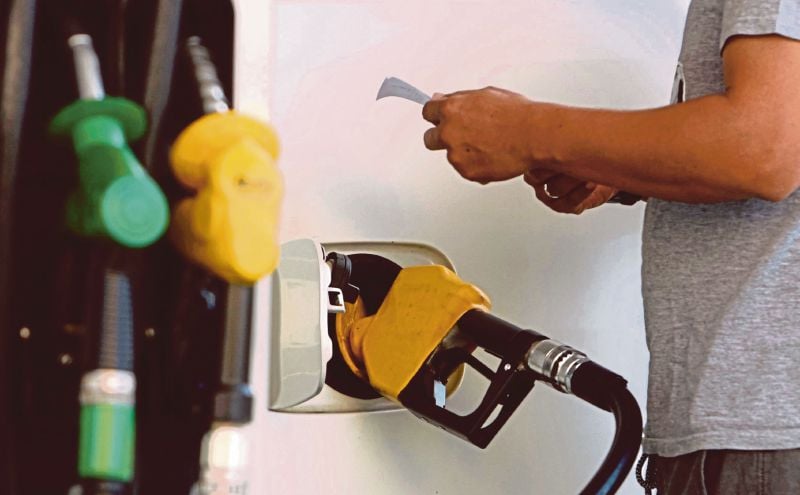
KUALA LUMPUR: Any move to adjust RON95 petrol subsidies will be a last resort for the government due to its direct impact on household spending, according to a senior economic adviser in the Prime Minister’s Office.
Prime Minister’s Office senior economic and finance adviser Nurhisham Hussein said Putrajaya currently has several policy options available but is proceeding cautiously given the sensitivity surrounding fuel prices and broader cost-of-living pressures.
Nurhisham spoke on the Keluar Sekejap podcast hosted by former health minister Khairy Jamaluddin and former Umno information chief Shahril Hamdan which aired on YouTube yesterday.
Speaking about the fuel shortage as a result of the global oil uncertainties involving the conflict at Straits of Hormuz ship route, he said the government had already reduced the subsidised fuel quota from 300 litres to 200 litres monthly, which he claimed only affected about 10 per cent of consumers in the country.
“About 90 per cent of consumers using fuel in Malaysia are not affected by the 200-litre RON95 quota,” he said speaking to Khairy on the show.
Nurhisham said among the policy options available to the government were increasing the subsidised fuel price from RM1.99 per litre to RM2.05 or RM2.10, or further reducing the monthly quota, which he added was “a last option”.
He said that any rationalisation involving petrol subsidies would likely be deferred for as long as possible.
“Petrol is a very sensitive issue and it has a direct impact on the rakyat’s pockets.
“Even if there is a petrol subsidy adjustment, it will be pushed back later.”
He added that while fuel prices had eased for now, the outlook for the global oil market remained uncertain, especially in the third quarter of the year.
Nurhisham said China had reduced imports for the time being while major oil-producing countries had increased output, helping to calm markets temporarily.
“But at some point you cannot rely on reserves forever. China will start importing again and countries will also need to rebuild strategic reserves,” he said.
He warned that analysts were already expecting July and August to become “very uncomfortable” periods for oil markets due to renewed demand and lingering physical supply shortages.
“At this point, the market is too optimistic,” he said, adding that there was “no guarantee” fuel prices would remain stable between July and September.
Nurhisham also highlighted ongoing efforts to tighten the Subsidised Diesel Control System (SKDS), particularly for the logistics sector, saying the government had previously allocated excessive diesel subsidies under the programme.
“We gave too much when we started SKDS. Now we are tightening it to create savings because we now have enough data to understand better,” he said.
He added that the government had recently announced the expansion of the Subsidised Diesel Scheme (SKTS) to include jeeps and pickup trucks in peninsular Malaysia as well as Sabah and Sarawak.
He acknowledged that fuel consumption trends remained a concern despite various rationalisation efforts and work-from-home initiatives.
He said government data showed petrol usage had slightly increased even after flexible work arrangements were introduced in the public sector.
“We are still trying to figure out why. People may save during the work week but travel more during weekends or long holidays,” he said.
He also said that some existing measures had yet to significantly reduce overall fuel consumption despite quota reductions and subsidy rationalisation initiatives.
“Having said that, this also underscores the need for Malaysians to avoid wastage not only in fuel consumption, but also in water and food usage.
“Not just energy, but food and water is also a key issue,” he said.
Nurhisham also shared concern over food wastage, saying that although Malaysia generally has sufficient food supply, large amounts of vegetables, chicken and eggs were discarded due to expiry dates.
In a chain circle, all the other sectors will also be affected.
For instance, when fertiliser supplies are affected, farmers may not be able to grow their crops properly, which reduces overall agricultural output.
He also said that medicines and medical supplies were sufficient, with alternatives provided by the Health Ministry should there be any shortages.
© New Straits Times Press (M) Bhd
المصدر: New Straits Times