Trigger mechanism could soften fuel subsidy shock: Economists
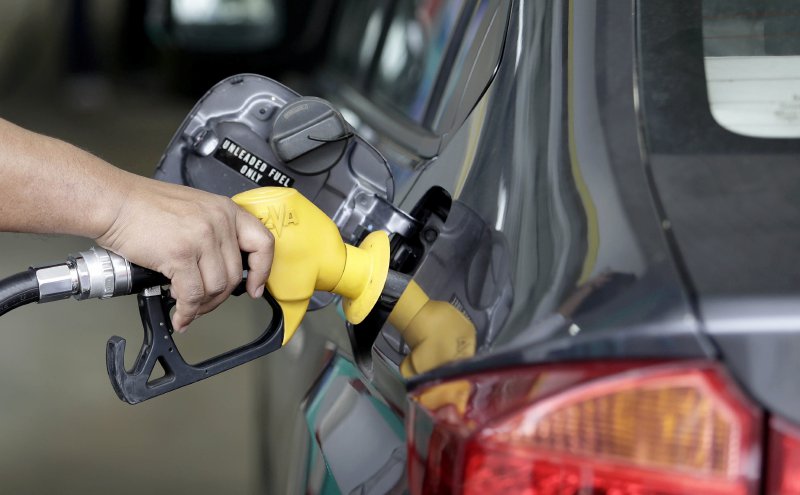
KUALA LUMPUR: A transparent fuel price “trigger mechanism” that adjusts retail prices when global oil prices breach predetermined thresholds could help cushion economic shocks while reducing long-term subsidy leakages.
Economists said without a phased approach, even a modest fuel price hike of between 10 sen and 20 sen per litre could trigger widespread spillover effects.
Transport costs, fresh food prices, e-hailing fares and operating expenses for small businesses will soar, they said.
IPP Wealth Managers director of investment strategy and chief economist Mohd Sedek Jantan proposed a structured pricing framework where fuel prices are automatically adjusted in small increments of between two sen and five sen per litre once Brent crude reaches specific levels, such as US$110 or US$120 per barrel.
He said such a mechanism would improve market predictability, help consumers and businesses prepare for cost increases and minimise sudden inflationary pressure.
The debate on the eligibility criteria for Budi Madani RON95 (Budi95) has intensified as Putrajaya seeks to balance cost-of-living concerns with fiscal sustainability.
Since September 2025, eligible Malaysians have paid for subsidised RON95 at RM1.99 per litre while non-subsidised prices fluctuate according to the Automatic Pricing Mechanism.
Sedek said blanket fuel subsidies distort market pricing mechanisms and reduce the government’s fiscal flexibility to strengthen critical sectors such as healthcare, education, infrastructure development and high-value industries.
“A gradual approach is important to avoid sudden shocks to household spending and domestic business activity. At the same time, this measure could help the government restructure subsidies in a more targeted manner without disrupting overall economic stability,” he said.
However, he said targeted subsidy reforms must be supported by clear mitigation measures to contain inflationary pressures on logistics, transport and supply chain costs that could affect consumer prices.
“In this context, the effectiveness of the policy should not depend solely on fiscal savings but also on how far those savings can be translated into stronger economic productivity and improved public well-being over the long term.”
Prime Minister Anwar Ibrahim recently said the government was still fine-tuning the mechanism for targeted RON95 subsidies, stressing that policymakers were cautious not to burden the upper middle-income segment.
The proposal is being reviewed under the National Economic Action Council following recommendations by the Crisis Management Task Force chaired by Tan Sri Hassan Marican.
SUBSIDIES SHOULD HELP THE VULNERABLE
Fuel subsidies should return to their original objective of supporting lower- and middle-income households, according to economists.
Bank Muamalat Malaysia Bhd chief economist Dr Mohd Afzanizam Abdul Rashid said the current subsidies have created imbalances.
He said higher income groups tend to own larger and high-powered vehicles, making them among the biggest beneficiaries of broad-based fuel subsidies.
“As such, rationalising fuel subsidies based on income level would be the next stage towards better allocation of resources.”
Afzanizam said targeted subsidy measures would likely have a smaller impact on high-income individuals compared with higher taxes.
He also said higher income groups have greater flexibility to transition to electric vehicles.
Centre for Market Education (CME) urged the government to overhaul its tiered subsidy system and replace it with a market-based voucher model to improve targeting and reduce economic distortions.
CME chief executive officer Dr Carmelo Ferlito said current subsidy mechanisms rely too heavily on income classifications which fail to reflect real differences in household needs.
He said households with similar incomes can face vastly different financial pressures depending on commuting distance, dependants, regional living costs and work arrangements.
“For example, one person earning RM8,000 may work from home and have limited transport costs, while another person earning the same income may travel long distances every day or support several dependants.
“Treating these two individuals in the same way because their income is similar misses the point. Need is not captured by income alone.”
He said subsidies should not distort market prices at the point of sale nor rely solely on broad income categories that often fail to reflect real household circumstances.
“Malaysia needs a subsidy system that protects those who genuinely need help without undermining price signals.”
CME proposed maintaining a single market-based fuel price while distributing assistance through purpose-specific vouchers for essentials such as fuel, transport and food.
The approach would preserve price transparency, reduce market distortions and improve targeting efficiency.
The think tank also suggested that vouchers could be made tradable within a regulated framework, allowing unused assistance to be redirected to households with greater needs.
“If someone is eligible for assistance but does not need the full amount, the ability to sell or transfer the voucher allows the support to move to those who value it more. This is not a weakness of the system; it is precisely how flexibility can improve targeting: the market can do a better job than a centralised approach.”
He said such a mechanism would combine social protection with market-based allocation, enabling more accurate distribution of assistance based on individual circumstances rather than broad classifications.
He added that vouchers should be purpose-specific, digitally traceable, and supported by safeguards against fraud, hoarding and abuse, while cautioning against excessive restrictions that could undermine their flexibility.
CME added that such a system would also improve fiscal transparency by making the true cost of subsidies more visible, compared with broad-based mechanisms that often mask expenditure and disproportionately benefit higher-consumption groups.
“The goal should not be to suppress prices but to protect vulnerable households while allowing prices to continue performing their essential role.”
The think tank believes Malaysia’s subsidy reform should be guided by three principles: a single market price, targeted support via vouchers and flexible allocation based on actual household needs rather than rigid income categories.
POSSIBLE CHANGES
OCBC Bank said adjustments to the government’s Budi95 mechanism cannot be ruled out as the subsidy bill continues to climb sharply.
Its senior Asean economist Lavanya Venkateswaran said inflationary pressures are emerging, with Bank Negara Malaysia noting early signs of cost pass-through effects linked to rising global commodity prices following the Middle East conflict.
Producer price inflation rose to 1.1 per cent year-on-year in March after recording 12 straight months of negative readings, indicating that cost pressures are gradually building.
“Our forecast for average headline Consumer Price Index of 2.0 per cent in 2025 is within the midpoint of Bank Negara’s projected range of 1.5-2.5 per cent.
“However, it depends heavily on retail fuel prices remaining unchanged,” she said in a macro research note.
The government is shouldering an estimated fuel subsidy burden of RM5 billion per month, a sharp increase from around RM700 million in January. That could exceed RM6 billion monthly should global crude oil prices continue climbing.
On monetary policy, she said resilient economic growth and manageable inflation allow Bank Negara to maintain a cautious wait-and-see stance.
OCBC expects the central bank to keep the Overnight Policy Rate unchanged at its July 9 meeting and throughout 2026.
According to Bank Negara, headline inflation rose to 1.6 per cent in the first quarter of 2026, up from 1.3 per cent in the fourth quarter of 2025, while core inflation eased slightly to 2.1 per cent from 2.3 per cent.
The rise in headline inflation reflected early spillover effects from higher global cost pressures, partly linked to geopolitical tensions in the Middle East.
© New Straits Times Press (M) Bhd
المصدر: New Straits Times