How Matthias Jügler accidentally wrote the most controversial novel of the year
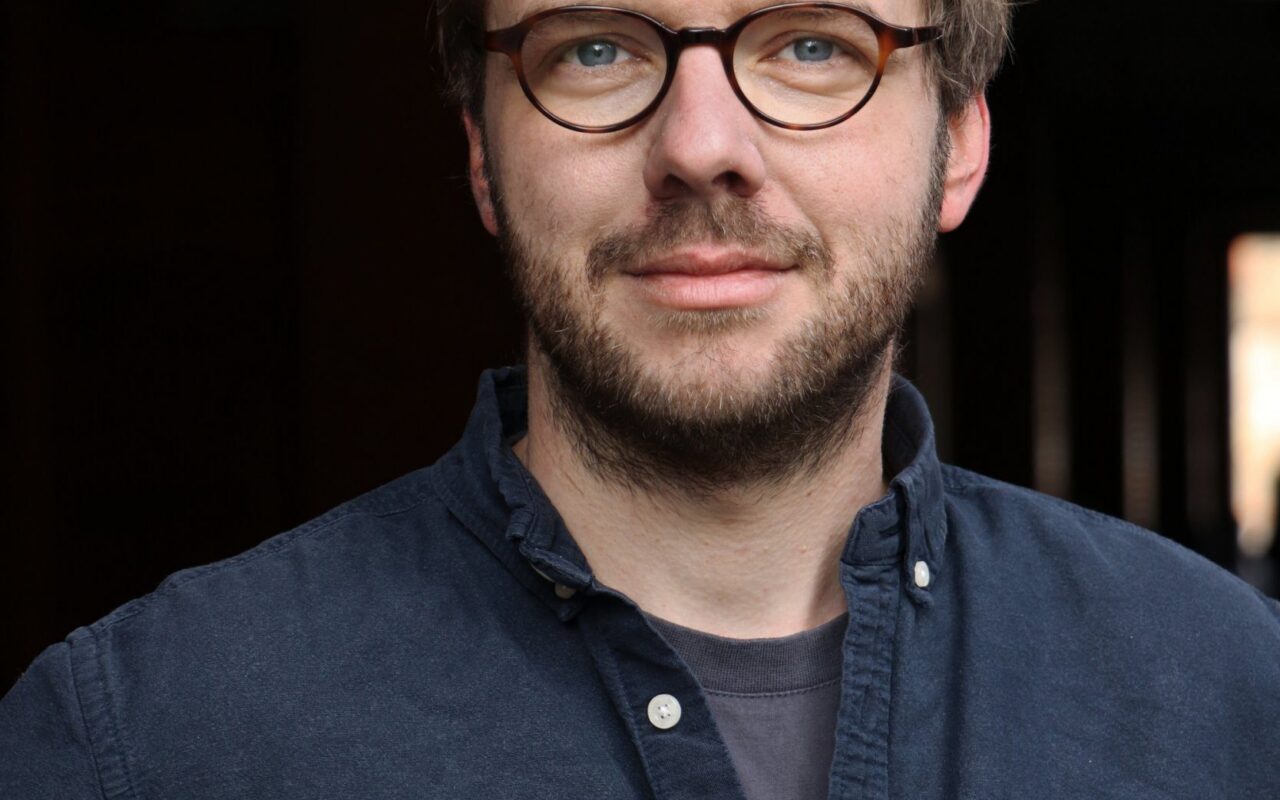
When the German author Matthias Jügler was told by a journalist friend that his new book was going to get him into trouble, he didn’t take it seriously. “I said to her: ‘Why would it? It’s such a quiet, harmless book,’” he recalls. But it turned out she was right. “If I’d known how much trouble it would cause, I might not have written it. I’m the kind of person who loves harmony.”
That book is Mayfly Season, a poignant and unsettling novel about a couple, Katrin and Hans, who live in the socialist German Democratic Republic (GDR) in the 1970s and who are plunged into grief after they are told by doctors that their newborn son, Daniel, has died. Katrin, who claims she heard Daniel’s healthy cry after he was delivered, suspects they have been deceived and their son is alive. This creates a rift between husband and wife who subsequently divorce. But, decades later, Hans receives a phone call that seems to confirm Katrin’s suspicions.
Jügler’s book, which has just been published in English, may be a work of fiction, but it is based on real-life allegations that in some cases the GDR took newborns and had them adopted after informing the parents their babies had died.
Shortly after the book came out in Germany in 2022, Jügler received an email from an official at the Bundestag, the German parliament, requesting that he call them. “My first thought was that it was spam, but then I realised the sender was an employee at a government agency dealing with human rights abuses in the GDR. When I called back, they asked about my sources, and I had the feeling I had to justify myself for writing this book. And it felt strange because I thought: am I [still] in the GDR or what? Why do I have to justify myself for a work of fiction?”
A few weeks later, a high-ranking politician wrote an article in a German national newspaper claiming that Jügler was “retraumatising” grieving parents, and there was no evidence that infants in the GDR were being given to other parents after being declared dead. But to Jügler, this is not true. He brings up the case of Regina and Eike – to protect their anonymity, their full names have never been released – a mother and son “who were reunited after decades”.

“And so I find myself wondering,” he says, “Why are politicians denying this?”
I speak to Jügler, 41, over video call from his home in Leipzig. He is warm, thoughtful and over the moon at having his book translated into English. The author was born in East Germany in 1984 and can barely recall the fall of the Berlin Wall in 1989 and the dissolution of the GDR the following year.
He was inspired to write Mayfly Season, his third novel, after watching a TV documentary about forced adoptions in the GDR. The film revealed how in some cases the state would take young babies from parents they deemed not to be good socialists and give them to couples whose values were more aligned with the government. “This kind of forced adoption in the GDR is something that almost every German has heard about,” Jügler says. But, he adds, the allegations that before this adoption, an infant could be declared dead “is something almost no one in Germany had heard about before”.
The book is told from the perspective of Hans, whom we meet as an older man in his sixties and who has since remarried (Jügler tells me he began writing the book from the perspective of Katrin but scrapped it as “something didn’t work”).
Hans still feels the loss of his son and of his ex-wife, who has since died from cancer. But he finds solace fishing on the banks of the nearby Unstrut river and reflecting on the lives of the pot-bellied carp and barbels lurking in its waters. Jügler himself is a keen fly-fisherman and his immersive ruminations on nature and its healing properties make for some of the most beautiful passages in the book. Fly fishing, he says, is “the perfect metaphor [for parents of ‘stolen children’]. You are searching for fish in the water, and you know it is somewhere out there, but you don’t know where.”
Researching cases of forced adoption, Jügler got in touch with Andreas Laake, founder of a victims’ group for “stolen children in the GDR” and their parents. Laake has estimated that the number of forced adoptions recorded as infant deaths could be as high as 2,000. In five of those cases, says Jügler, there is solid evidence of falsified deaths.

Through Laake, Jügler got in touch with mothers looking for children, including a woman he calls Karin S, a resident of Saxony-Anhalt in central Germany. In the 1980s, Karin watched her baby daughter being taken into the antenatal department minutes after she had given birth. Shortly afterwards, she was told her baby had died. “But Karin doubted that and she had come across inconsistencies and contradictions in the documents,” Jügler says. “She told me, ‘The only thing I could believe in was not the doctors but this huge doubt I had.’”
Every time Karin sought help from official channels, she was met first with sympathy and then hostility when she pressed for further investigation. In the end, the body of the child she was told was her daughter was exhumed and a later DNA test confirmed they were, in fact, mother and daughter. “So she finally found out her suspicion was only a suspicion, and she has found peace knowing that,” says Jügler.
Asked why the current German government would seek to deny or cover up instances of infants being falsely declared dead, he shrugs and says: “I’m not an expert in these things but it could be about [avoidance of] compensation.” Jügler also notes that there are Germans who feel nostalgic for the GDR and have a rose-tinted view of the country before the wall came down. “They will say, ‘We had nice summer vacations at the Baltic Sea. Everyone had a job and the country [prospered].’ They forget the Stasi [the GDR’s secret police] and that you could go to jail for saying something against the system. People have a longing for positive stories, but it was not a sunny state where everything was okay.”
The controversy around his book continued long after publication. At one reading at a bookshop in Leipzig, he was asked by the organisers to provide on stage official documentation “to prove there were really infants who were declared dead. They wanted to see the documents about the women I had spoken to, but I told them this is private, so I cancelled this reading.” Word got out and Jügler was inundated with requests to go on radio and TV stations to talk about why his book was making waves. “After that, there was huge momentum and public pressure on this issue.”
Jugler could have written a non-fiction book on the stolen children of the GDR. But, as he points out, “life is not exactly like literature. I could have done a book of interviews, but I wanted to get to the emotional truth of these searches. Like, how does it feel searching for your son or daughter for decades? How does it feel to live with this loss and with all these questions in your head? Of course, I don’t know exactly how it feels, but by writing a novel I could get a sense of it. I was living this life while writing it, and that, to me, is the gift of fiction.”
‘Mayfly Season’, translated by Jo Heinrich, is published by The Indigo Press, £12.99
المصدر: iNews