Johor MB defends surprise visits, says they expose ground realities
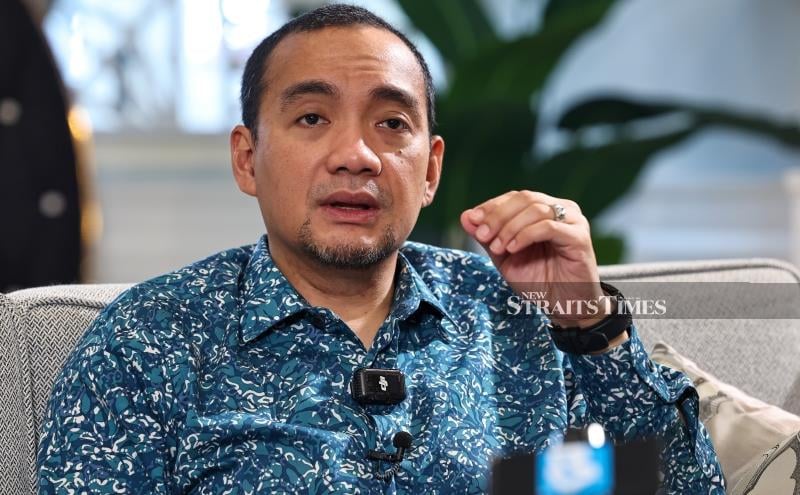
JOHOR BARU: Johor Menteri Besar Datuk Onn Hafiz Ghazi has defended his practice of making surprise visits to state agencies, saying the approach helps expose gaps between official reports and ground realities.
He said there was often a discrepancy between what is reported on paper and what is happening on the ground, making direct inspections necessary.
“Most of the time, the reports I get on paper and what is actually happening on the ground are two different things. That is why when I go down to the field, I can see the difference,” he said on the 200th episode of political podcast Keluar Sekejap.
Onn Hafiz dismissed claims that his visits to the Johor-Singapore Customs, Immigration and Quarantine (CIQ) complex, hospitals and infrastructure projects amounted to micromanagement.
He said the high daily volume of about 300,000 commuters at the CIQ alone justified direct oversight.
“From when I was small until now, that has always been the situation. Hundreds of thousands of Johoreans commute every day. I asked myself, until when is this going to continue?” he added.
On criticism over public reprimands during visits, Onn Hafiz said there was a right and wrong way to enforce accountability.
“It is never my intention to embarrass anyone. If you notice in my videos, the face of the person being reprimanded never appears because we want to protect dignity. What matters is resolving issues raised by the people,” he said.
He said leaders should go to the ground with the sole purpose of solving problems, not seeking publicity.
“Do not go down to the ground with the intention of embarrassing anyone. The important thing is that what we do truly resolves the issue for the rakyat,” he added.
On governance, Onn Hafiz said the same philosophy applied to public spending, stressing the need for high-impact outcomes.
Citing projects such as the Johor Zoo and Muzium Tokoh Kepimpinan Johor, he said both were upgraded on lean budgets using local council allocations.
“If we spend, the impact must be high. Low cost, high impact, or if the cost is high, the impact must justify it. Otherwise, there is no point doing it,” he said.
© New Straits Times Press (M) Bhd
المصدر: New Straits Times