Live Wednesday, 17 June 2026
BREAKING
Egyptian FM holds calls with Iranian counterpart , U.S. Envoy on regional developmentsZverev into French Open last-fourIsraeli fire kills four people in Gaza, medics sayAncelotti eases Neymar W. Cup fearsArab, Islamic states condemn Israeli actions at Al-AqsaSyria Hopes for Terrorism Delisting to Spur Economic RecoveryBenfica linked with Fulham’s SilvaVan der Breggen takes Giro leadKremlin: Saudi Arabia Named Guest of Honor at St. Petersburg Economic Forumرياضة محلية‘Really cool to share this journey with her’: Michelle Wie West playing for her family at U.S. Women’s OpenArchaeological Replicas Showcase Saudi Arabia’s Rich History at Kuala Lumpur Int’l Book FairRenewable Energy Helps Red Sea Global Avoid 118,000 Tons of Carbon EmissionsLetter: Carol Rumens obituaryEngland v India: third and deciding women’s T20 cricket international – liveHealthVolunteers serve comfort food in a worrying Ebola outbreak – Sault Michigan NewsEconomyTrump signs AI executive order asking companies to give government early access to modelsVarietySouth West Water fined nearly £2million after supplying homes with parasite-ridden water that left four people in hospital – and telling people it was safe to drinkScience & TechYour car is following you – how to reclaim your data privacy on the open roadWorldHigh school valedictorian yanked from stage after hijacking speech to rant against Israel and ICESaudi FM Receives Written Message from Russian CounterpartEgyptian FM holds calls with Iranian counterpart , U.S. Envoy on regional developmentsZverev into French Open last-fourIsraeli fire kills four people in Gaza, medics sayAncelotti eases Neymar W. Cup fearsArab, Islamic states condemn Israeli actions at Al-AqsaSyria Hopes for Terrorism Delisting to Spur Economic RecoveryBenfica linked with Fulham’s SilvaVan der Breggen takes Giro leadKremlin: Saudi Arabia Named Guest of Honor at St. Petersburg Economic Forumرياضة محلية‘Really cool to share this journey with her’: Michelle Wie West playing for her family at U.S. Women’s OpenArchaeological Replicas Showcase Saudi Arabia’s Rich History at Kuala Lumpur Int’l Book FairRenewable Energy Helps Red Sea Global Avoid 118,000 Tons of Carbon EmissionsLetter: Carol Rumens obituaryEngland v India: third and deciding women’s T20 cricket international – liveHealthVolunteers serve comfort food in a worrying Ebola outbreak – Sault Michigan NewsEconomyTrump signs AI executive order asking companies to give government early access to modelsVarietySouth West Water fined nearly £2million after supplying homes with parasite-ridden water that left four people in hospital – and telling people it was safe to drinkScience & TechYour car is following you – how to reclaim your data privacy on the open roadWorldHigh school valedictorian yanked from stage after hijacking speech to rant against Israel and ICESaudi FM Receives Written Message from Russian Counterpart
Prices
US dollar50.20EGPEuro58.29EGPBritish pound67.40EGPSaudi riyal13.39EGPUAE dirham13.67EGPKuwaiti dinar162.83EGPJordanian dinar70.81EGPQatari riyal13.79EGPTurkish lira1.08EGPChinese yuan7.42EGPGold 246,981.44EGP/gGold 216,108.76EGP/gGold 185,236.08EGP/gSilver113.13EGP/g
NEWS BREAKING
5-questions

What It Takes to Preserve Floppy Disks
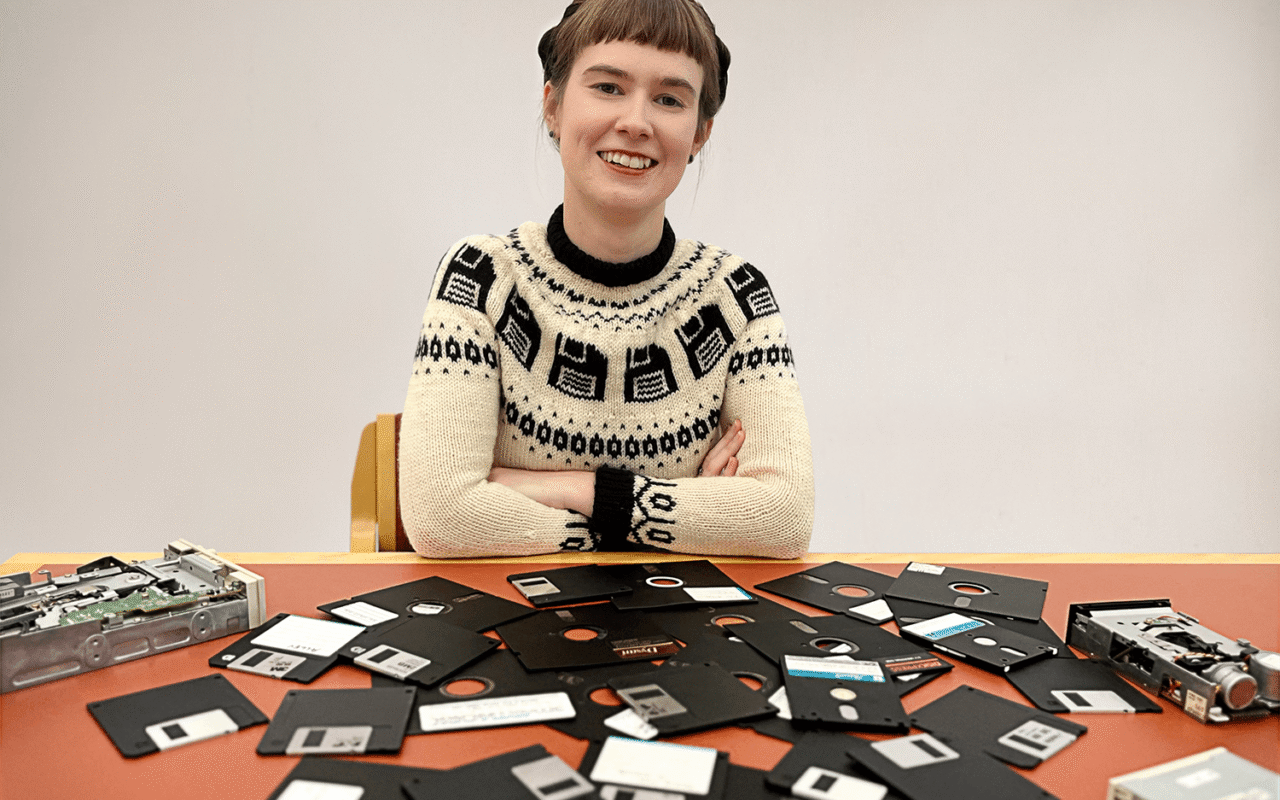
Floppy disks are several decades old—many of the disks are degrading and the data stored on them is at risk of being lost. In response, Leontien Talboom, a technical analyst at Cambridge University Libraries and Archives, led a roughly year-long project preserving floppy disks called “Future Nostalgia,” which concluded in January.

Leontien Talboom

Leontien Talboom is a technical analyst at Cambridge University Libraries and Archives, where she transfers material from a wide range of storage media to make them accessible to archivists.

IEEE Spectrum spoke to Talboom about her work preserving data from Cambridge’s collection of floppy disks and collecting knowledge about the disks themselves.

Why is it important to preserve floppy disks now?

Leontien Talboom: Two reasons. First, the physical media is starting to degrade. Floppy disks are made from plastic, but they’ve got a magnetic layer of iron oxide, and that’s deteriorating. A lot of floppy disks are found in attics or garages, which means they also suffer from mold.

Second, a lot of people who developed floppy disks and systems that use floppy disks are starting to retire or pass away, which means that a lot of tacit knowledge is disappearing.

Whom did you go to for that tacit knowledge?

Talboom: I went to the retro computing community. Their work is more around preserving these machines to keep them running [than] the data that lives on the floppy disk. But they know their stuff about floppy disks.

For example, they know that in a lot of the older disks, the inside of the disk—the doughnut—gets stuck to the top. So if you flex the casing, the doughnut falls down again. If I hadn’t known that, I would have assumed that those disks in our collection were broken or corrupt.

What is the most difficult part of working with floppy disks?

Talboom: Accessing the files can be quite challenging if we don’t understand the file system. Within libraries and archives, we get a lot of material from machines that are not as well loved. Many of the personal computers that you had at home, such as the Amstrad or ZX Spectrum or BBC Micro, are very well documented. But a bunch of our material comes from business or research systems. They’re not as nostalgic for people, so there’s not as big a community preserving this type of material.

Do you have a favorite type of floppy disk?

Talboom: Five and a quarter. The weirder the system, the more frustrating and fun it is. I quite like doing that detective work.

The Amstrad disk has also really stolen my heart. The popularity of floppy disks is very geographically dependent. Our library, for example, has these Amstrad 3-inch disks. But if you go to the U.S., they’re really uncommon. They weren’t able to manufacture enough of these drives, and [3.5-inch disks] took over at a certain point. But they’re really cute.

What’s the best method for sustainably storing data?

Talboom: The main thing is actively looking after it. A lot of the floppy disks we get in the library haven’t been accessed for 20 or 30 years, which means that you need certain special hardware to actually read them, and then work with emulators or other tools to make these file formats accessible.

Now that we’ve done that work and transferred it, we can monitor it and make sure it’s not suffering from anything like bit rot. We can also make decisions around migrating it to other file formats or working on specific file systems or unknown file formats in more detail.

المصدر: IEEE Spectrum

0 Views

أضف تعليقاً

Your email address will not be published. Required fields are marked *